Give the inlet and outlet concentration
Name the prepared liquid or pulp, concentration measurement method and target outlet. Include flow, temperature and the relevant product behaviour. The equipment selection needs the intermediate at its own inlet; dried-fruit tonnage or finished beverage output cannot be substituted for that concentration duty.
Calculate the operating boundary with measured streams
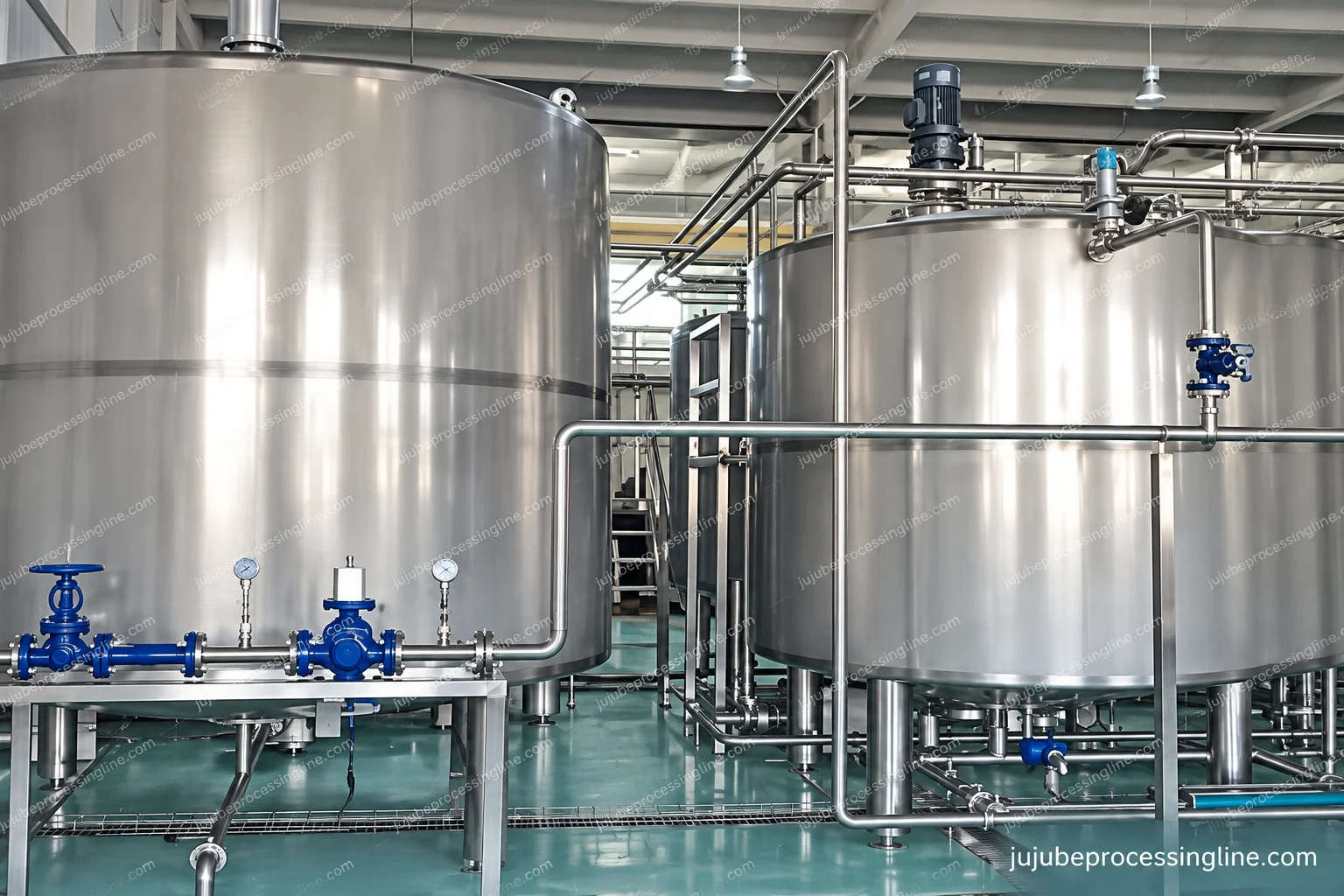
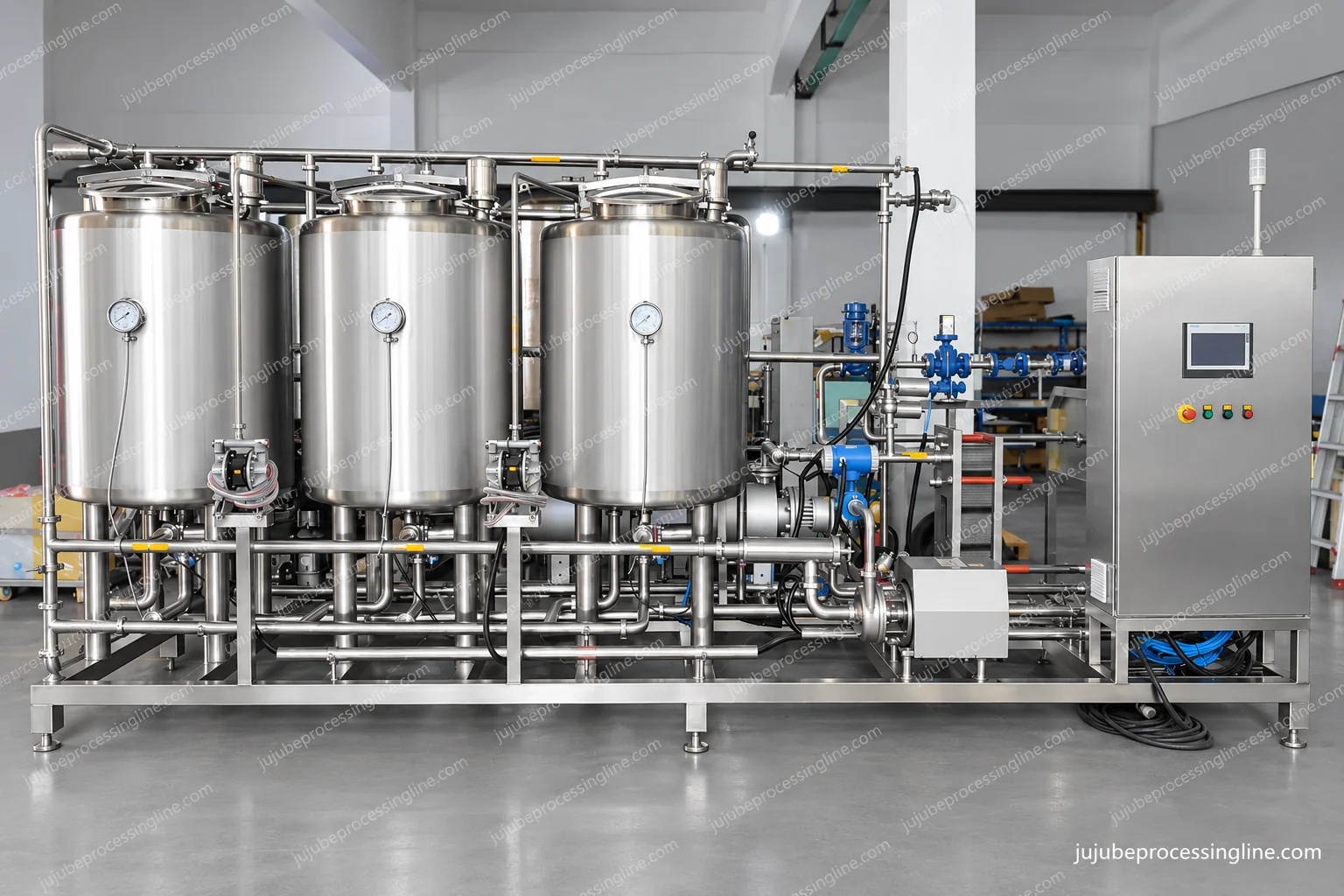
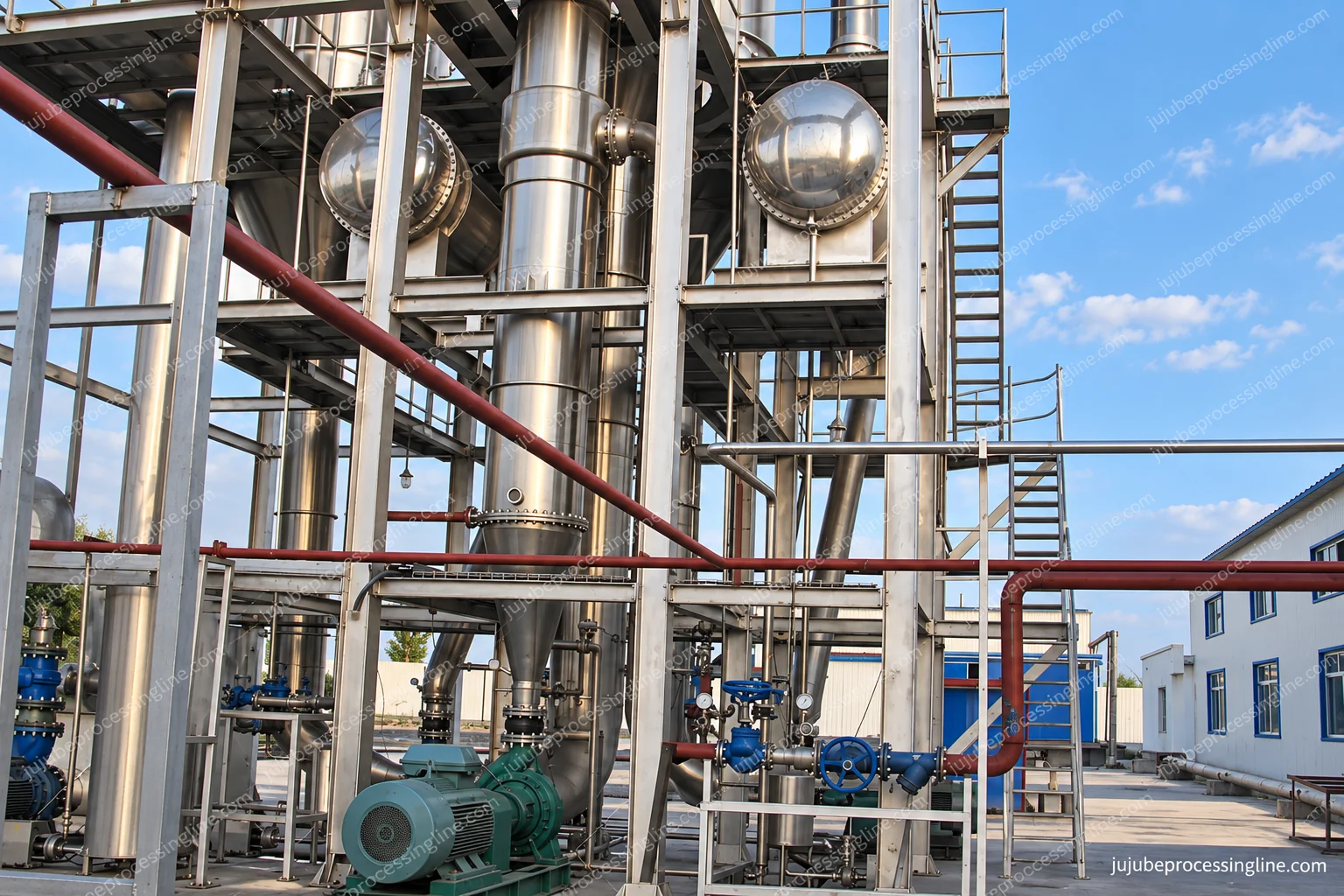
Keep feed, concentrate and removed water as separate streams with compatible units and measurement points. Ask for a stated evaporated-water capacity and its conditions. The heat-transfer structure and effect arrangement should be specified in the proposal, not inferred from a photograph of vessels and platforms.
Select circulation for the product range
As solids rise, viscosity and deposits can change the required flow and transfer behaviour. Review foaming, circulation, retained material and discharge conditions across the operating range. A material assessment can be needed before selecting the structure or accepting a reference duty for a new jujube intermediate.
Plan services and vapour handling
Identify heating, cooling, vacuum service, vapour or condensate handling and electrical supply in the chosen arrangement. Service access, drains and cleaning routes must remain usable. Utility availability and the actual water-removal objective help define the operating scope without making unsupported universal efficiency claims.
Check the next equipment connection
State whether the outlet enters a buffer, thermal step or bulk filler, and the condition required there. Align the concentrate transfer route and any holding limits with that machine. Request a drawing, product-contact specification, utility schedule and duty acceptance basis for the proposed configuration.