Start with the beverage specification
A jujube beverage may use prepared puree, juice or extract, with an explicit recipe for water and other ingredients. State the desired fruit body, clarity and formulation rather than treating all drinking products as the same liquid. Retained-pulp and clarified beverages lead to different decisions for separation, mixing and transfer.
Define the fruit intermediate supplied to mixing
The blending tanks receive an identified pulp or extract, not unassessed whole dried fruit. Record the intermediate concentration, incoming temperature, solids and viscosity where measured. If preparation or extraction is outside the equipment supply, specify the customer-side inlet so that the downstream package can be selected against a real feed.
Match mixing to the addition sequence
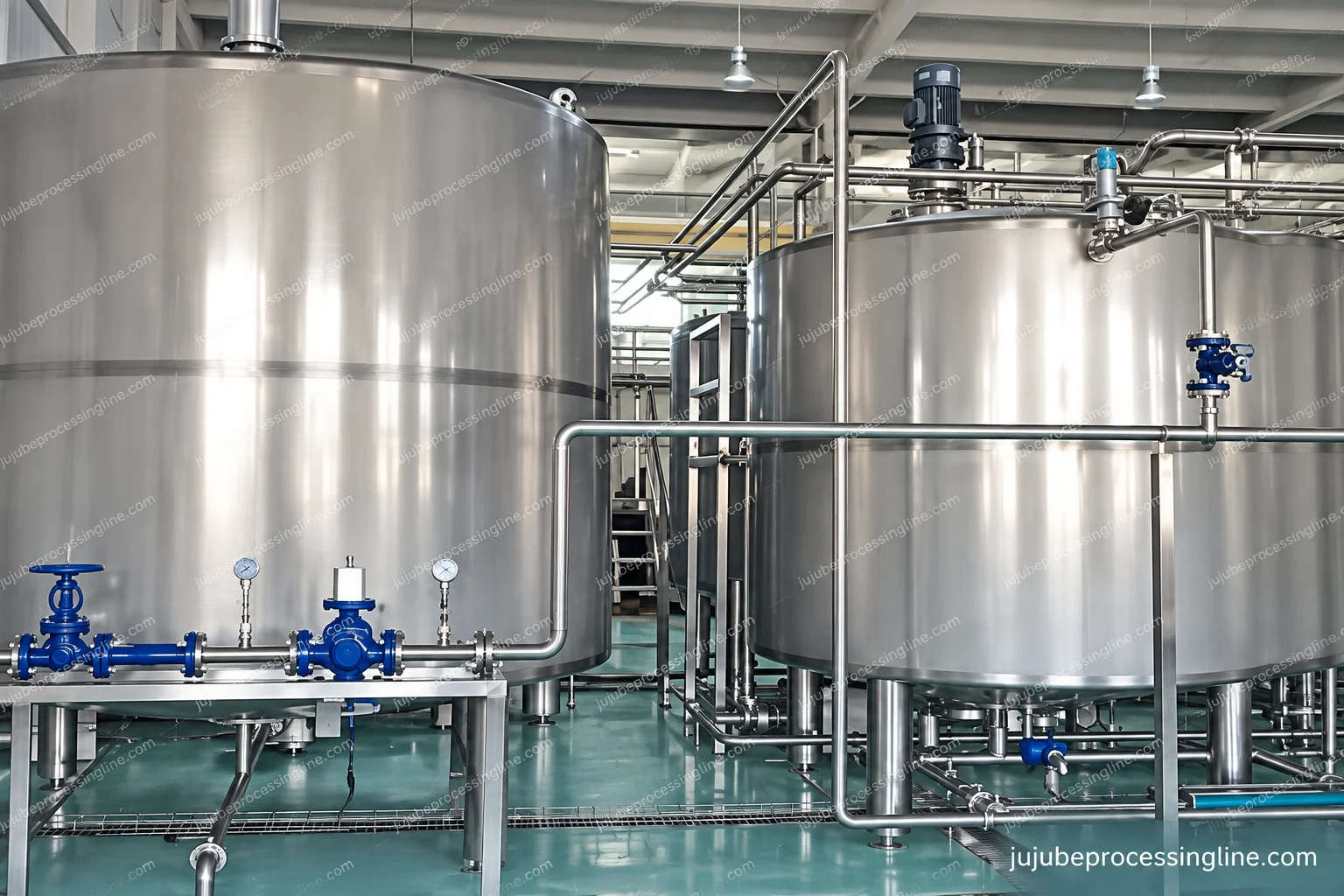
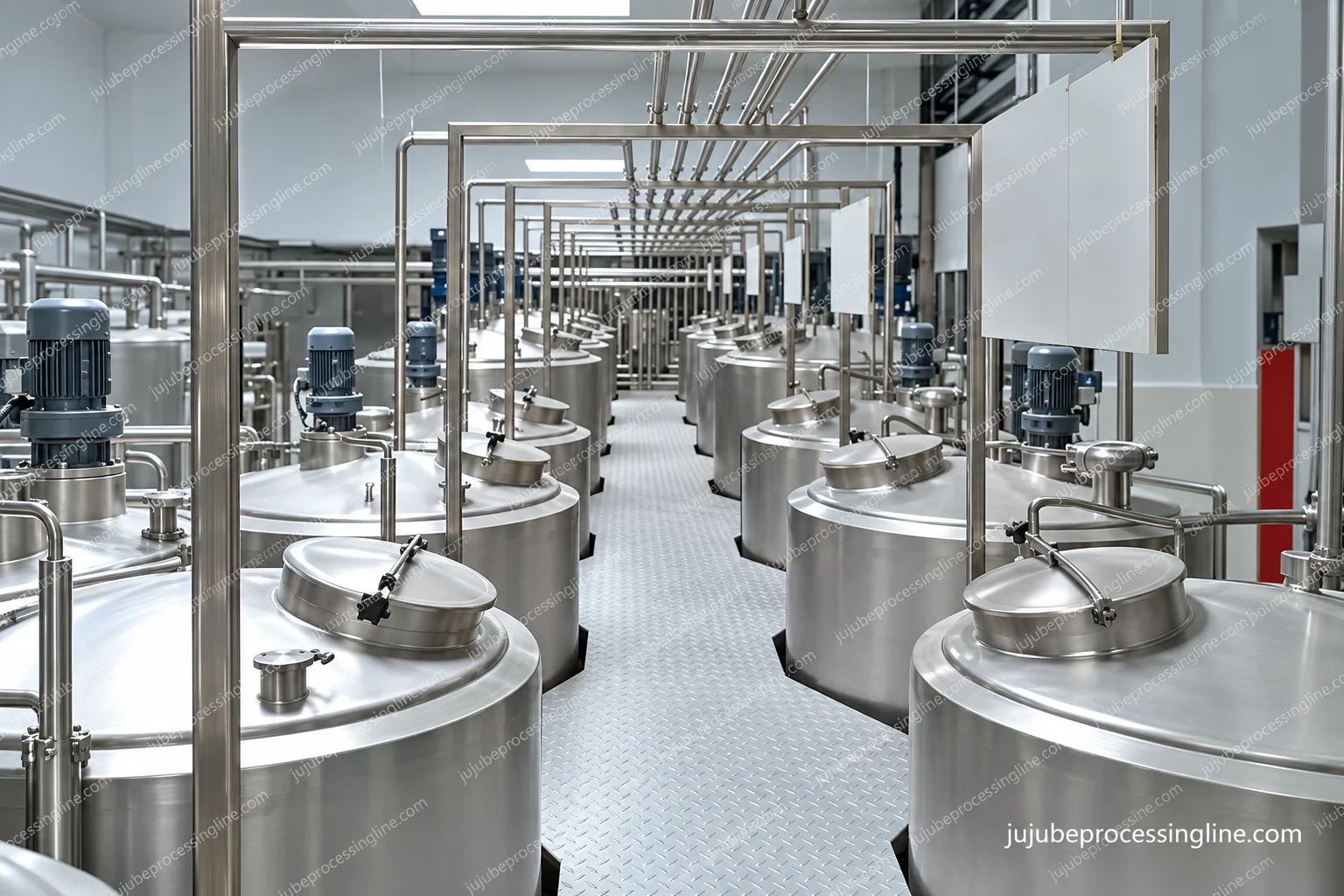
Specify which ingredients dissolve, disperse or remain suspended, and how they enter the batch. The shown tank group has top drives and service access; internal elements, working volume and sampling arrangements belong in the selected vessel specification. Keep water and ingredient additions in the recipe record, separate from fruit recovery and incoming-fruit capacity.
Choose clarification only when the product needs it
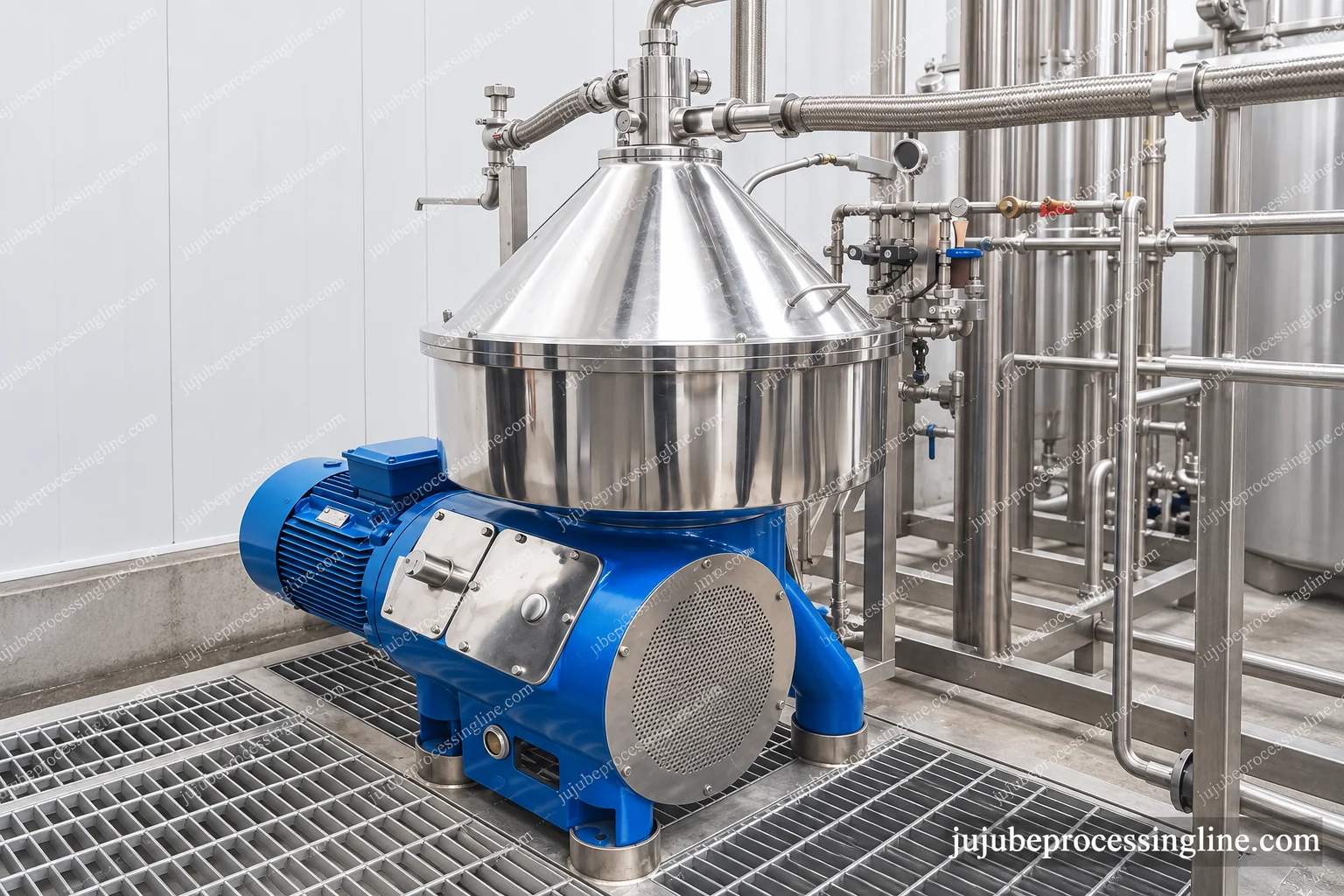
A disc-stack clarifier acts on a suitable prepared liquid. It is selected using solids loading, viscosity and the clarity objective. A beverage intended to retain pulp may need a different product-body decision. Define the appearance test and the solids discharge instead of adding clarification merely because a liquid route includes mixing.
Coordinate treatment with packaging
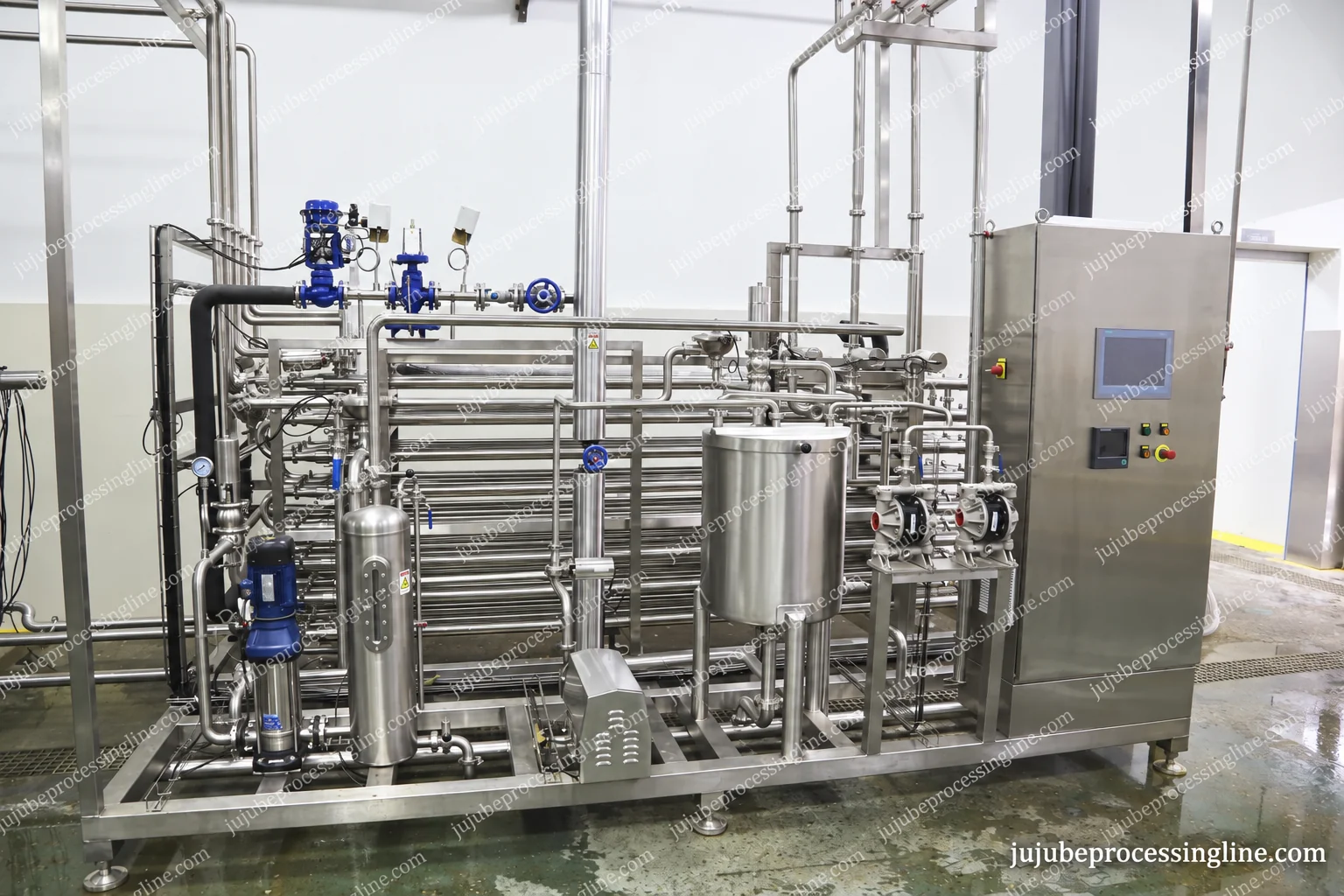
State the intended bulk bag, drum, bottle or other package. The photographed filling family covers aseptic bulk bags and drums; retail-container handling is a separate supply discussion. Product-specific treatment conditions and package validation must be agreed with the treatment and filling handover, including interruptions and cleaning.