Specify prepared material rather than whole-fruit tonnage
The pulper selection starts with the state and measured flow of material released from stone control. Document preparation, firmness, water additions and the accepted quality check at that inlet. A rated family throughput is not a guarantee that every fresh or dried lot will produce the same accepted puree output.
Use the two working stages deliberately
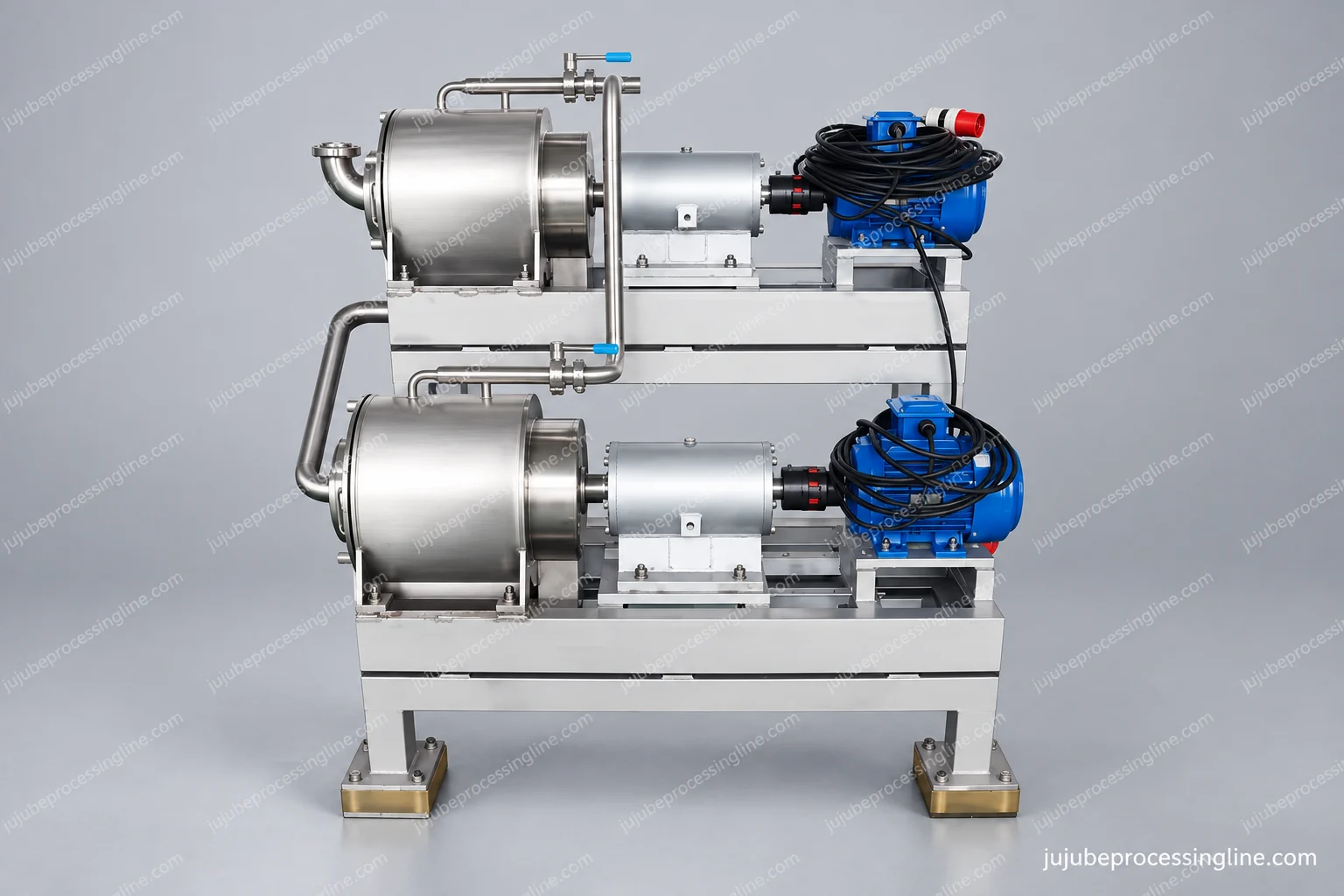
The assembly has upper and lower processing chambers with separate drives. Pulping separation is followed by the selected refining duty. Agree the fruit body you want to retain and how product and rejected skin or fibre are collected. Assess both streams from a comparable operating period during the material trial.
Treat screen aperture as one selection variable
The current equipment references list a family screen range of 0.4–1.5 mm. Feed preparation, screen condition and working contact affect the result. Screen aperture does not certify a maximum hard-fragment size or finished-particle distribution; define the required inspection method and product acceptance separately.
Check reference model and power with the proposed configuration
The source equipment family lists DJ-3, DJ-5, DJ-10, DJ-15 and DJ-25 with distinct reference throughput and power values. Request the proposed model, duty basis, screen arrangement and drawing for your application. Do not infer a pictured model or an operating guarantee from the family photograph.
Leave the chambers serviceable
The inlet, product collector and reject path need space as well as pipe connections. Allow safe opening of chamber covers, inspection of screens and seals, and removal of trapped fibres after isolation. Connect the accepted pulp outlet to a suitable buffer and transfer path rather than selecting the pulper in isolation.