Start with the actual bulk package
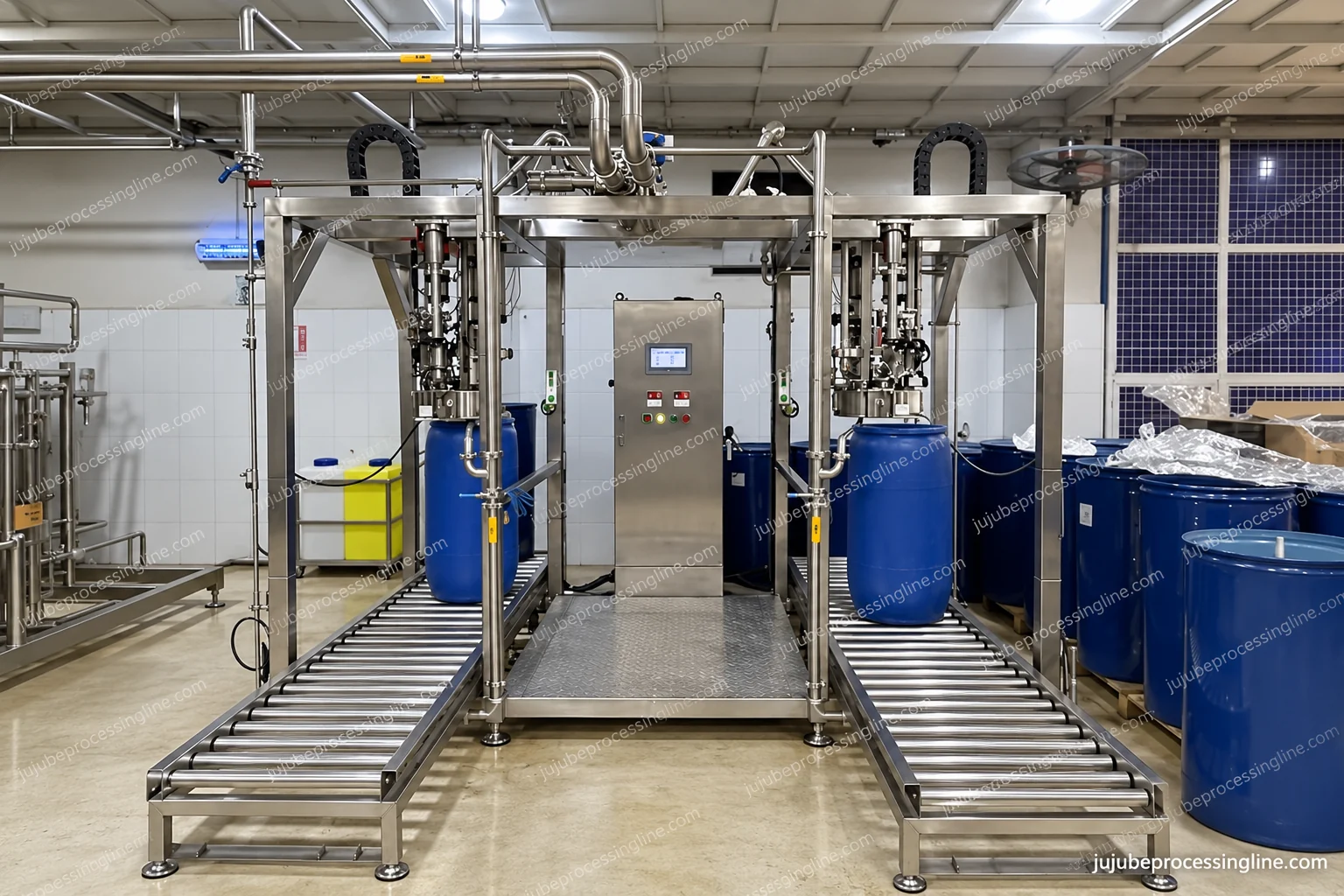
Describe the bag, fitment and supporting container rather than only a nominal filling volume. The shown family has two filling positions and drum roller lanes. A compatible fitment and the correct package-handling arrangement are part of the selected duty; this evidence does not describe a retail bottle or pouch filler.
Provide a defined treated-product inlet
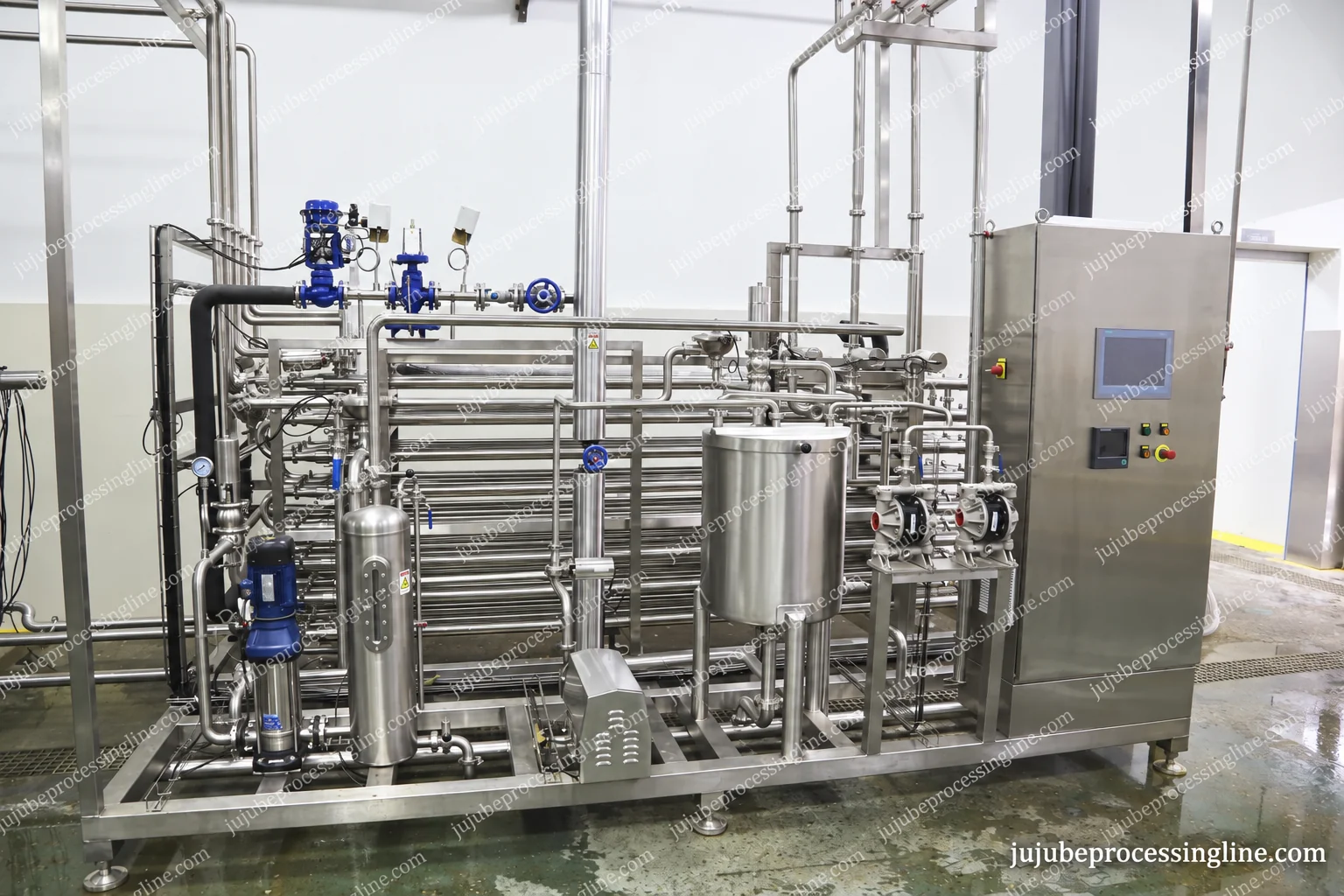
The filler receives a product prepared for the selected aseptic operation. State viscosity, particles, temperature, flow and filling behaviour. Treatment, cleanable connecting pipework and coordinated operating controls are needed to maintain the agreed handover; the filling head alone does not define the finished product’s storage life.
Coordinate head access and drum movement
Allow operators to stage the package, position the drum, connect the fitment and remove the finished container. Keep the roller lanes clear of product and service routes. The location of the controls and filling positions should fit the available access and the intended handling method.
Agree interruption and changeover conditions
Define how treatment and filling respond when product supply changes or package handling pauses. Ask about the selected head preparation, closure sequence, product-contact cleaning and restart responsibilities. These conditions belong in the integrated equipment scope rather than being inferred from the number of visible filling heads.
Send package and product information together
A useful filling enquiry combines the bag and fitment specification with the product, quantity basis and existing upstream treatment. Share the available space and container movement plan. Request the proposed head configuration, connection schedule and acceptance responsibility for the actual supplied package.