Describe the product at the skid inlet
State the prepared puree, juice or formulated intermediate that enters treatment. Provide measured flow, temperature, viscosity with method, particles and solids where known. A water-flow reference or original-fruit capacity does not describe the duty of a viscous or particulate product inside the selected product channel.
Select heating, holding and cooling together
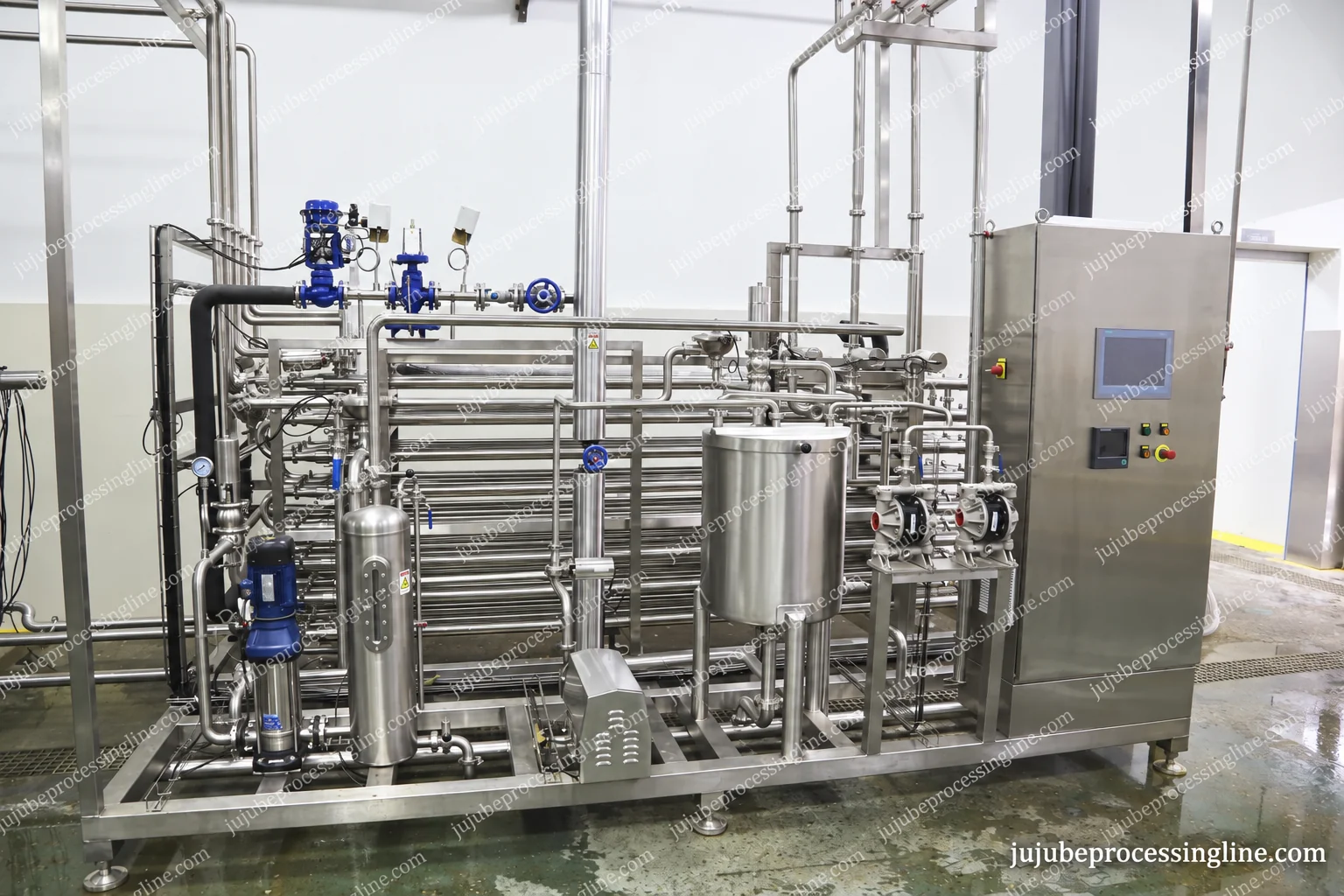
The photographed family shows straight-tube runs, return bends, service equipment and controls on a common arrangement. Detailed product and service paths depend on the proposed duty. Agree the treatment objective and process-validation responsibility for the real product and package rather than applying one generic time and temperature to every jujube product.
Review deposits over the intended run
Composition, concentration, temperature and product flow affect fouling and pressure behaviour. Discuss the planned operating run and the method for assessing deposits or product changes. Cleaning access to tube connections, seals and low points belongs in the equipment choice, not as an afterthought after the skid is installed.
Coordinate the filler and interruption states
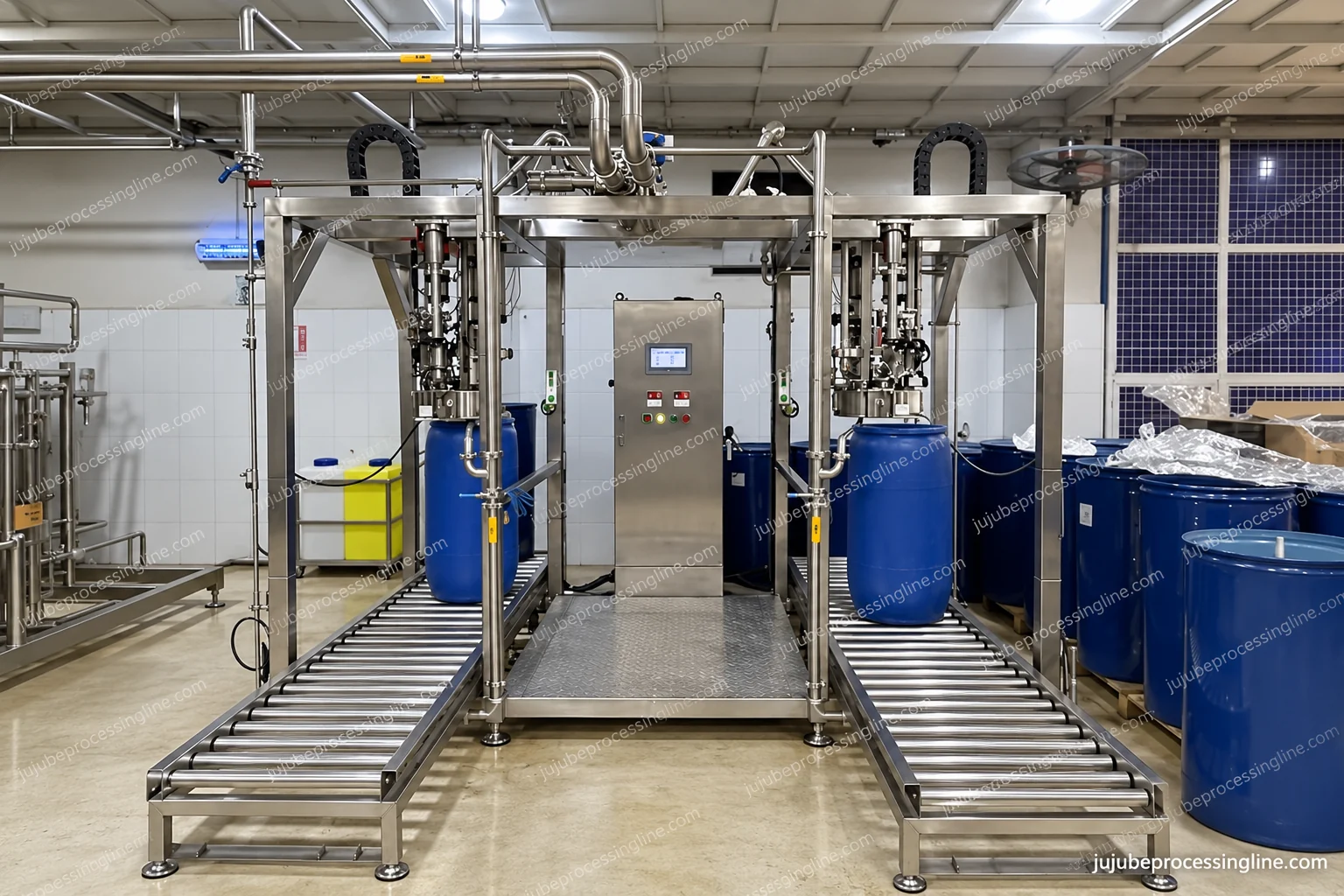
The treatment outlet must match the bulk package and following filling connection. Identify start-up, steady operation, interruption, stopping and cleaning states. Product pressure boundaries, valves and controls must work together across the handover, including the customer-supplied equipment outside the skid scope.
Ask for a product-specific equipment schedule
Include the available heating and cooling services, power supply, product connection heights, cleaning return and package. Request the proposed channel arrangement, utility duty, control scope and acceptance basis. Where product measurements are missing, define the representative material and the selection questions to be resolved.