Begin at the existing product connection
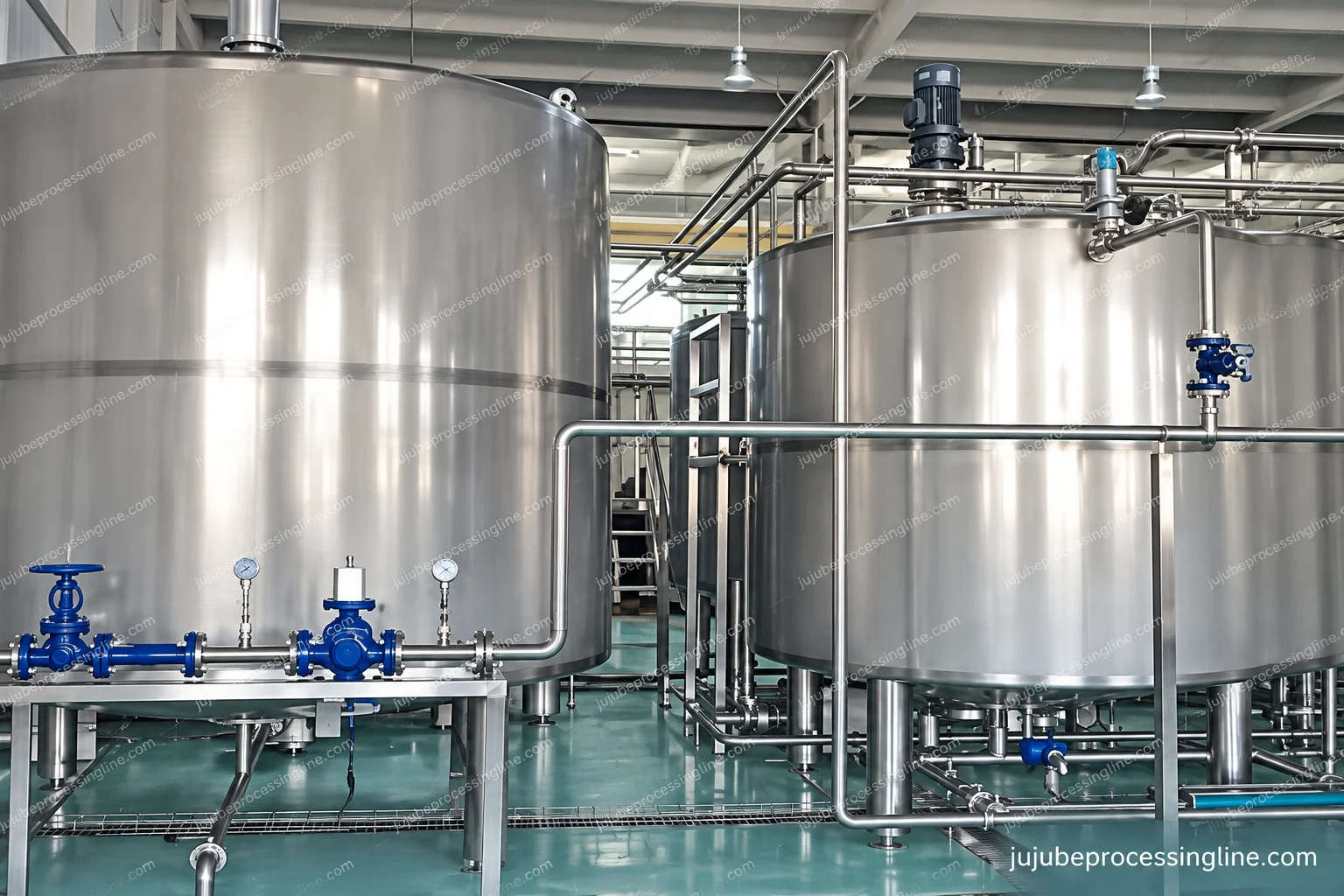
A downstream upgrade does not require recreating every upstream operation. Describe the existing puree, juice or extract supply and the point at which the new equipment receives it. Provide product flow, temperature, viscosity, particles and supply interruptions where known, alongside the connection height and pipe route.
Identify the operating gap
Explain whether the current problem is irregular feeding, entrained air, treatment, packaging, cleaning access or a combination. Buffering and deaeration address different duties. Select an operation because the incoming product and production objective require it, rather than automatically including all machine families in a package.
Connect treatment and filling operating states
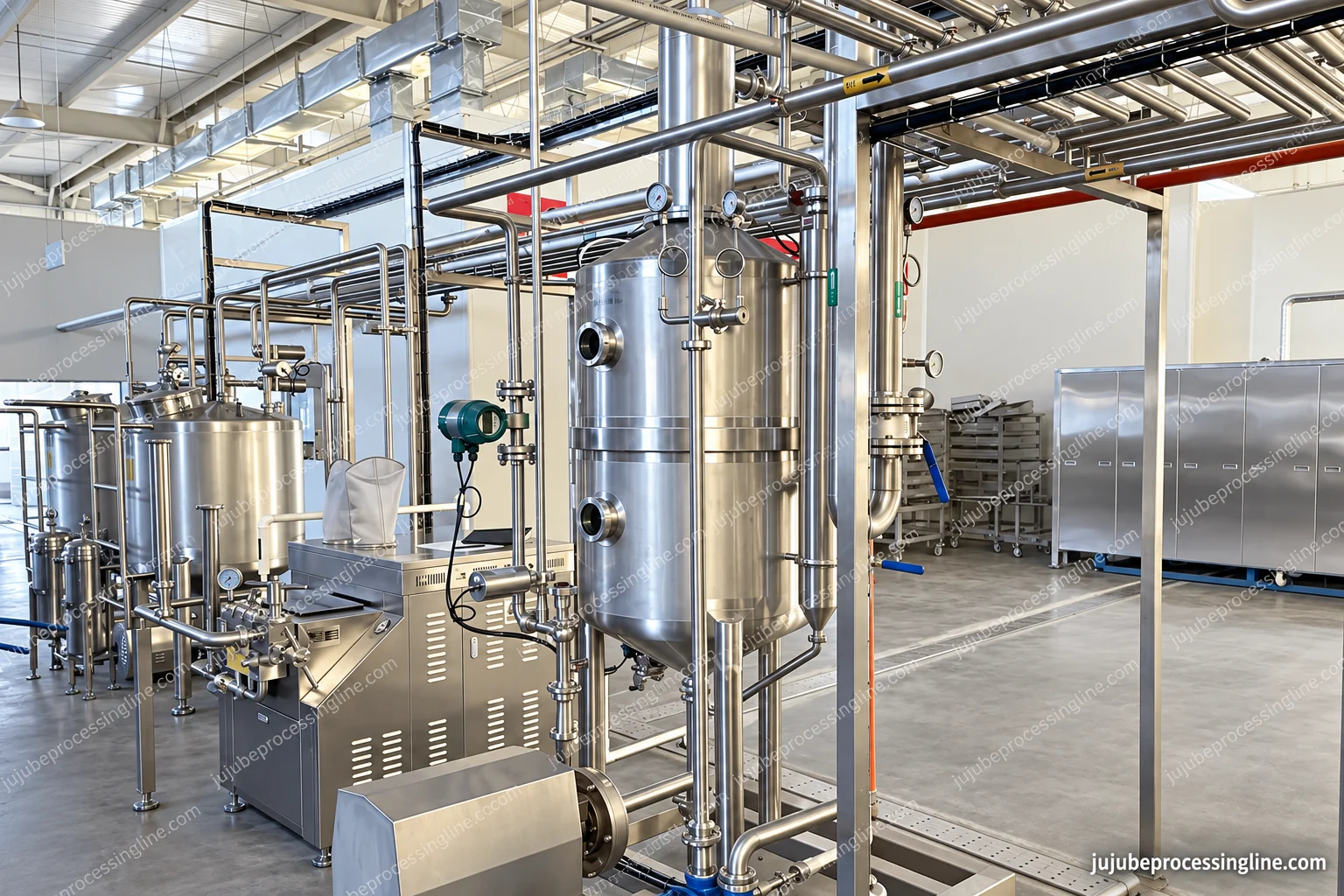
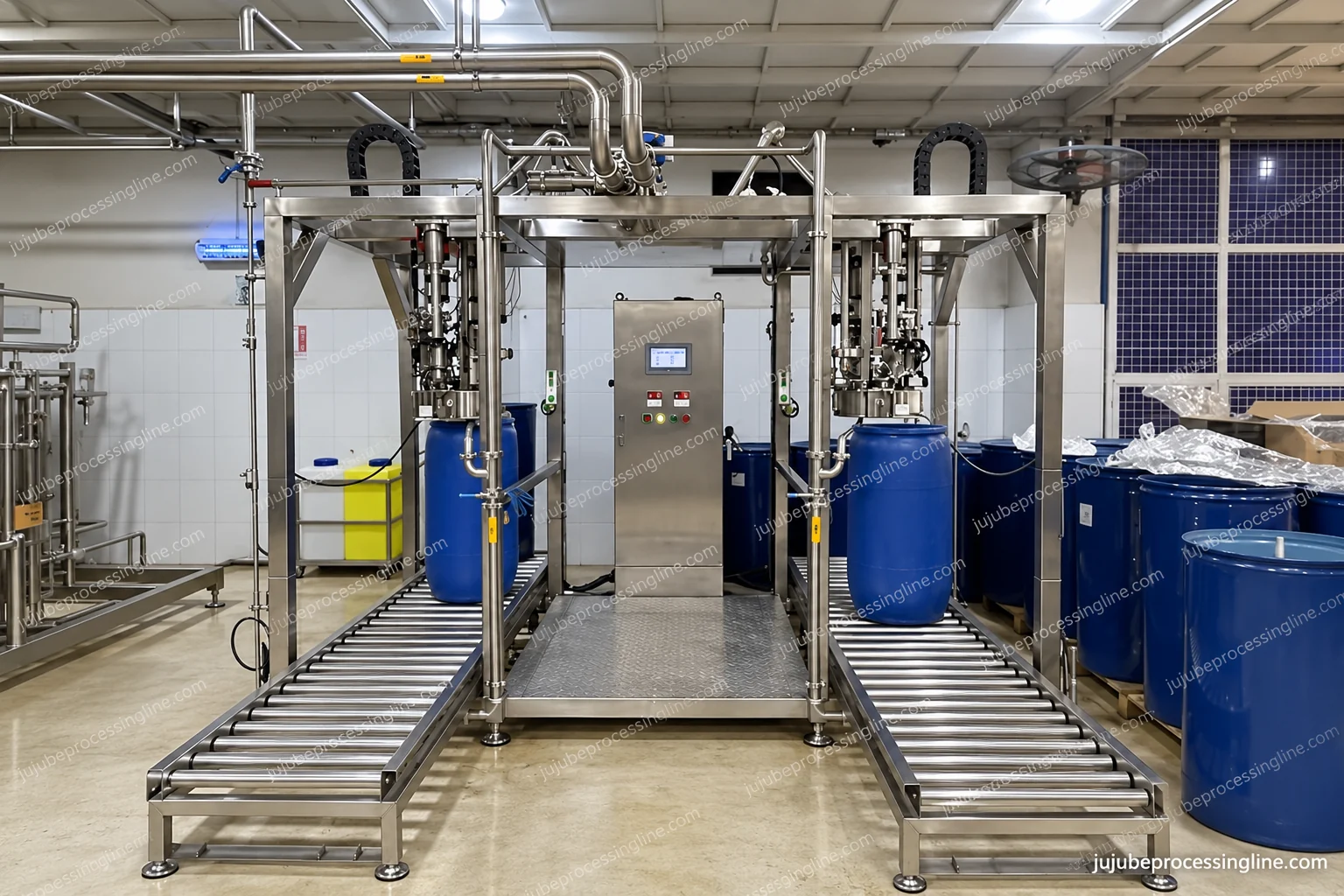
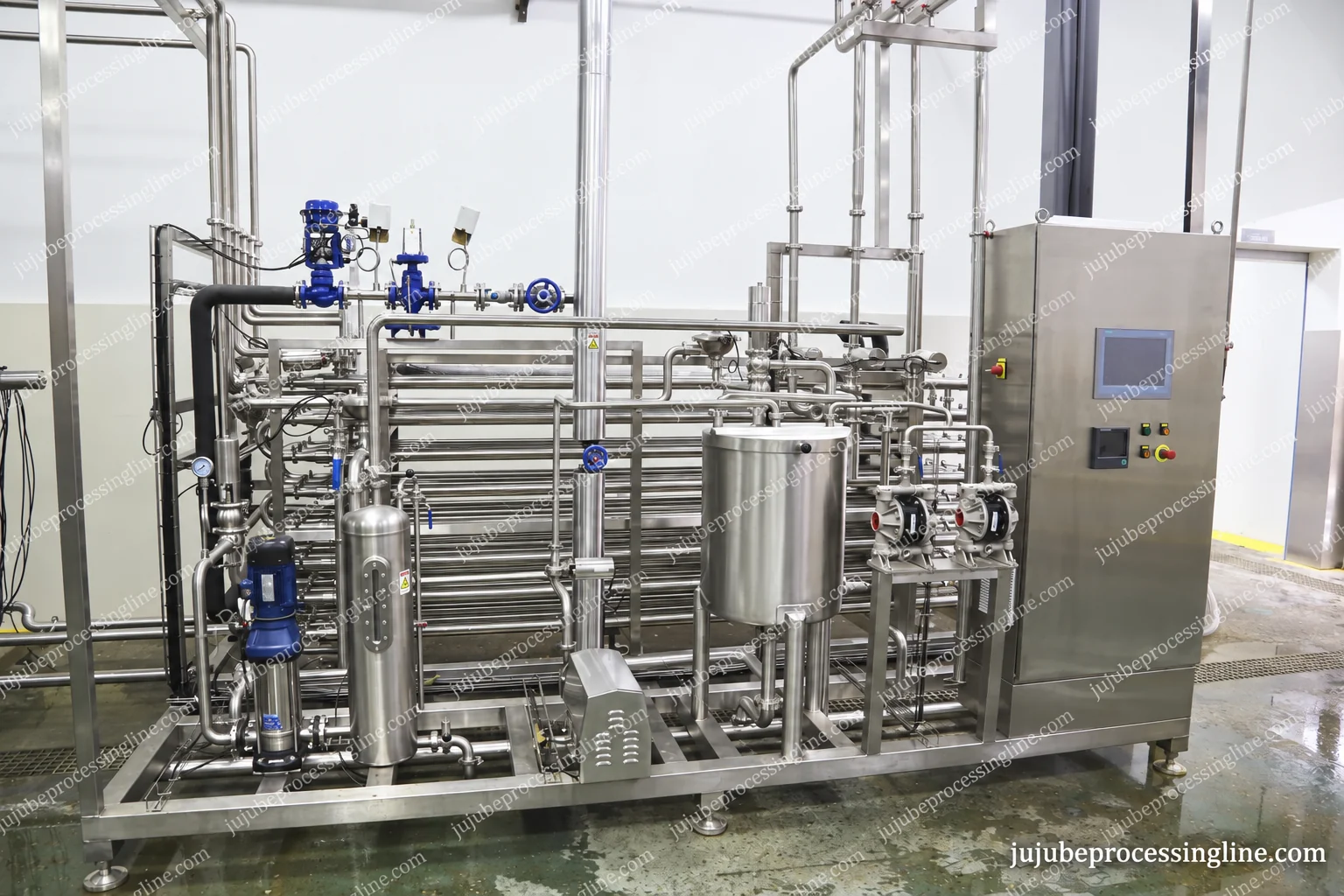
The tubular skid and filler need coordinated product and pressure boundaries. Discuss start-up, stopping, interruptions and changeover as well as steady running. Identify which existing pumps, valves or controls are retained, and who supplies the connections between existing and new machines.
Make utilities and cleaning practical
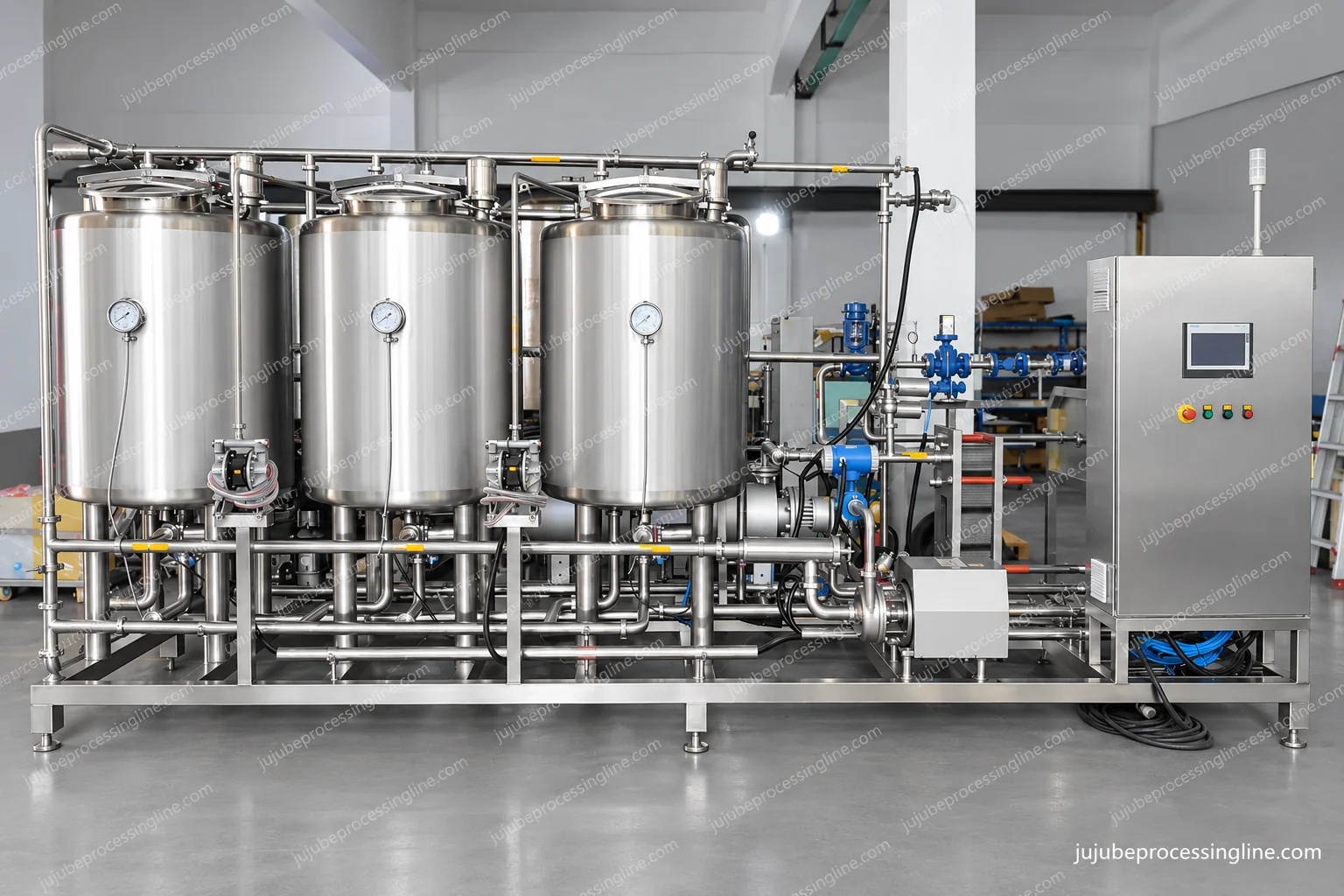
List available services and the route for product, cleaning return and drainage. A three-tank CIP skid serves defined compatible closed circuits; the existing open fruit-handling area has separate cleaning needs. Access to valves, removable connections and working chambers should remain usable after the upgrade is installed.
Request a defined supply boundary
Share the existing layout, equipment list and a short description of the desired result. The proposed scope can then identify new assemblies, retained equipment, interface responsibilities and commissioning checks. Agree acceptance around the actual supplied product and package rather than a generic complete-factory claim.