Define the prepared feed and concentration target
Specify whether the evaporator receives a prepared liquid, extract or pumpable puree. State inlet concentration and the intended outlet concentration using a named measurement method. These values describe the concentration duty; incoming whole-fruit quantity is a separate preparation and material-balance question.
Quote water-removal capacity separately
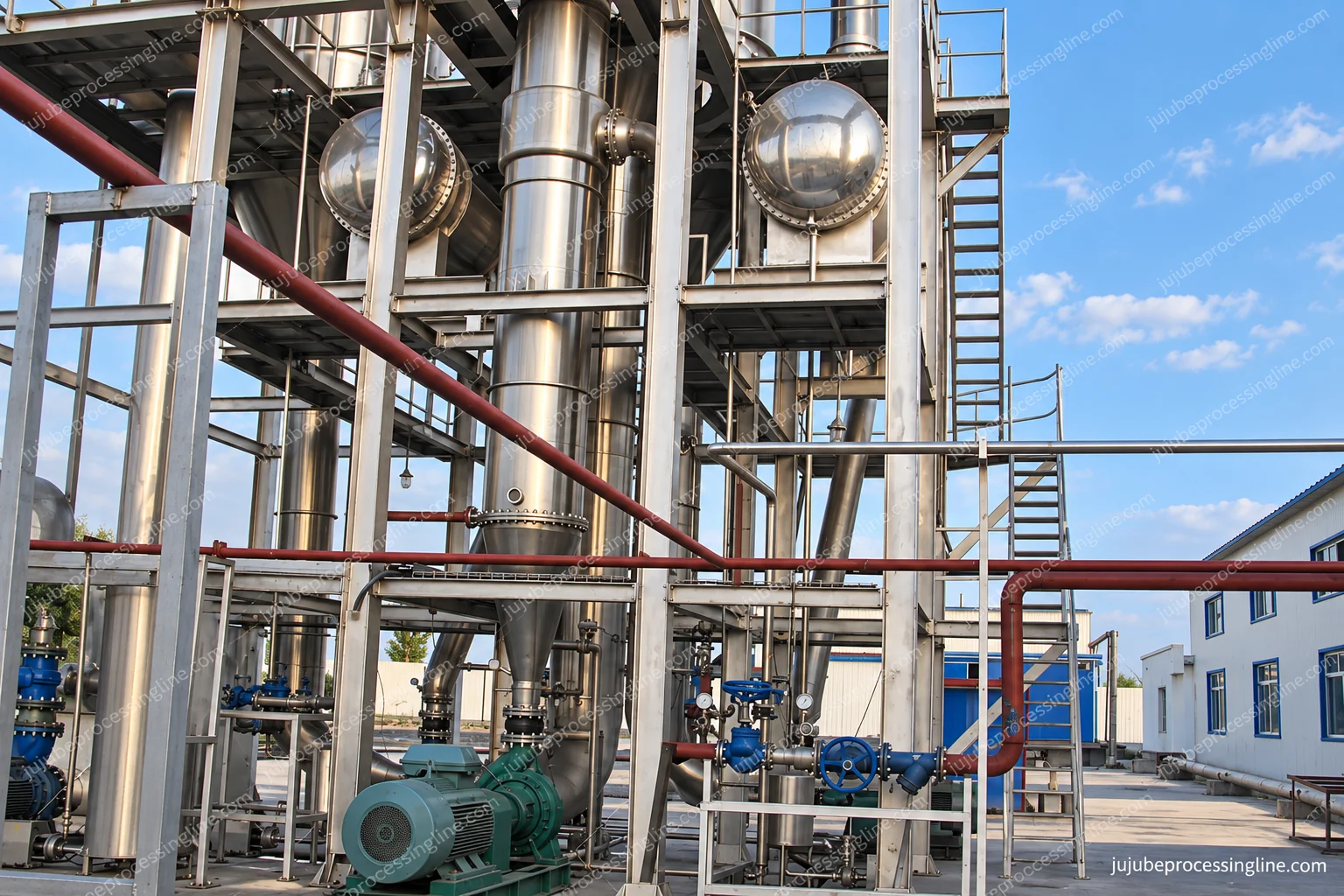
Evaporation removes water under the selected vacuum and heating arrangement. Discuss feed flow, concentrate output and evaporated water as different streams. The proposed structure and utility requirement follow the actual water-removal duty and feed behaviour, rather than a nominal incoming-fruit tonnage alone.
Allow for the changing viscosity
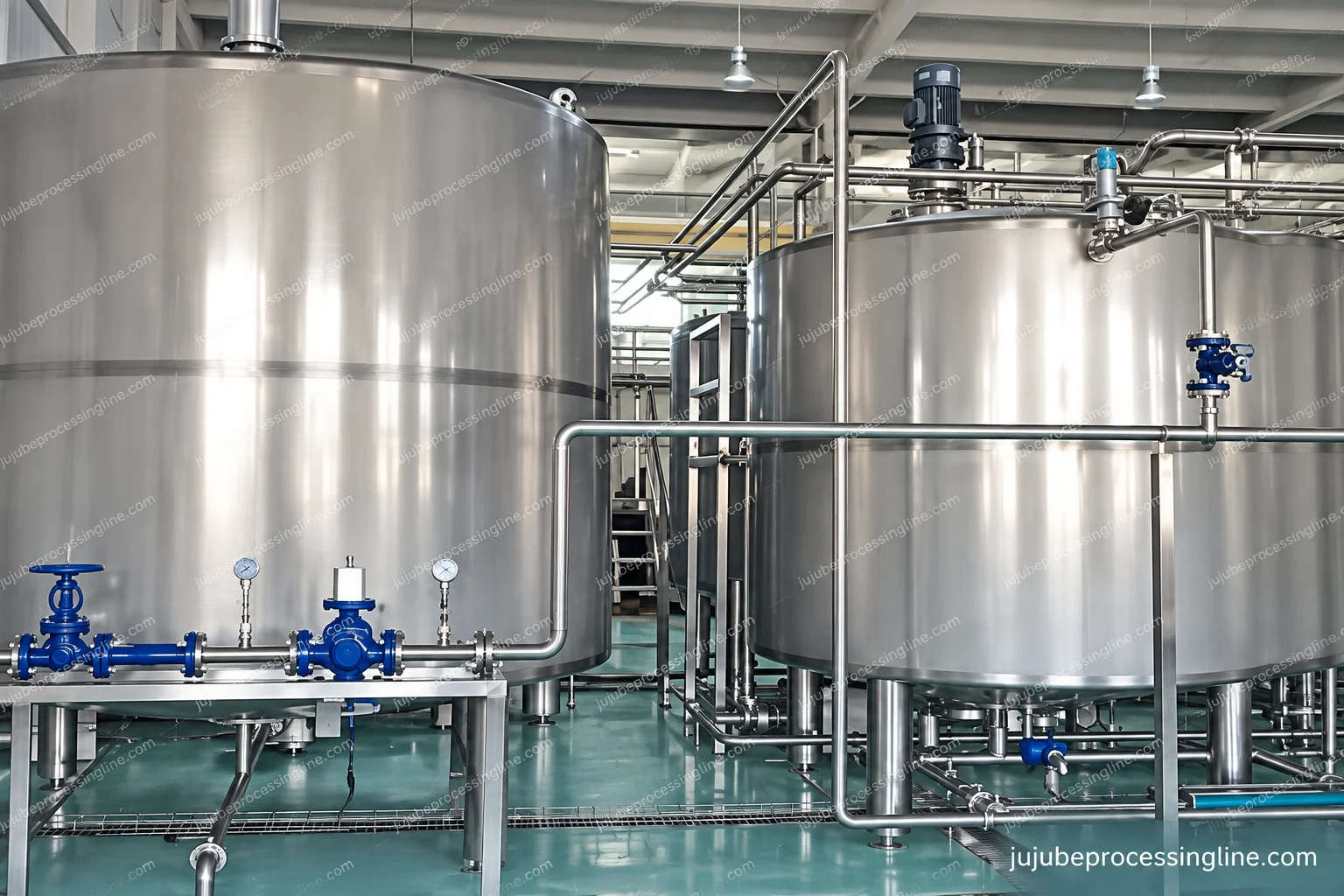
The material can become harder to circulate and discharge as concentration rises. Assess viscosity at the operating temperature, deposits, foaming and the required run length. The selected circulation path, heat-transfer structure and outlet must accommodate that range; a general vessel photograph cannot establish those design details.
Keep vapour and cleaning interfaces in the scope
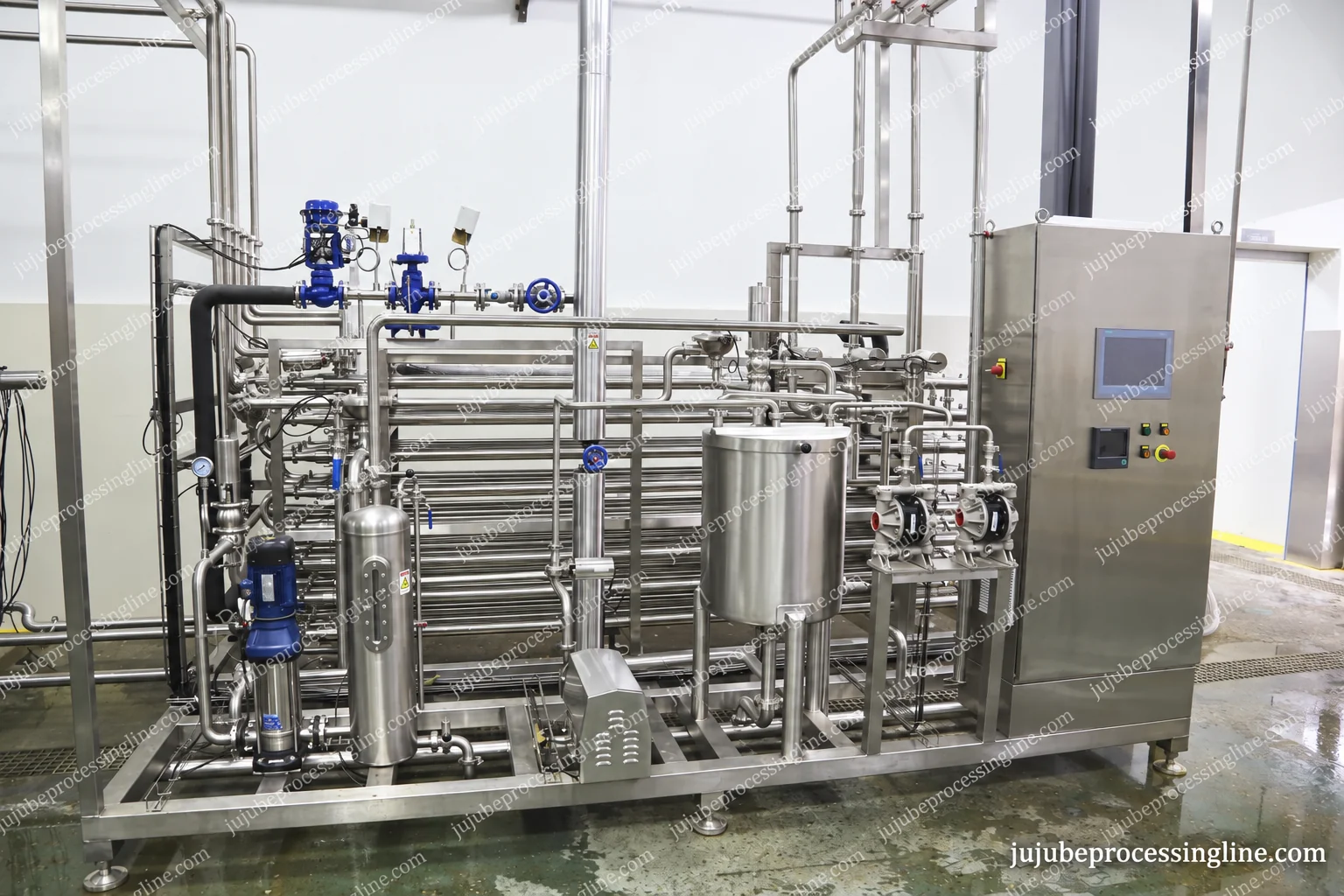
Describe the available heating and cooling services, vapour handling, condensate boundary and cleaning connections. Service platforms and product low points must remain accessible. Agree how retained material and cleaning discharge are managed alongside the product circuit rather than leaving them outside the layout.
Plan the concentrate handover
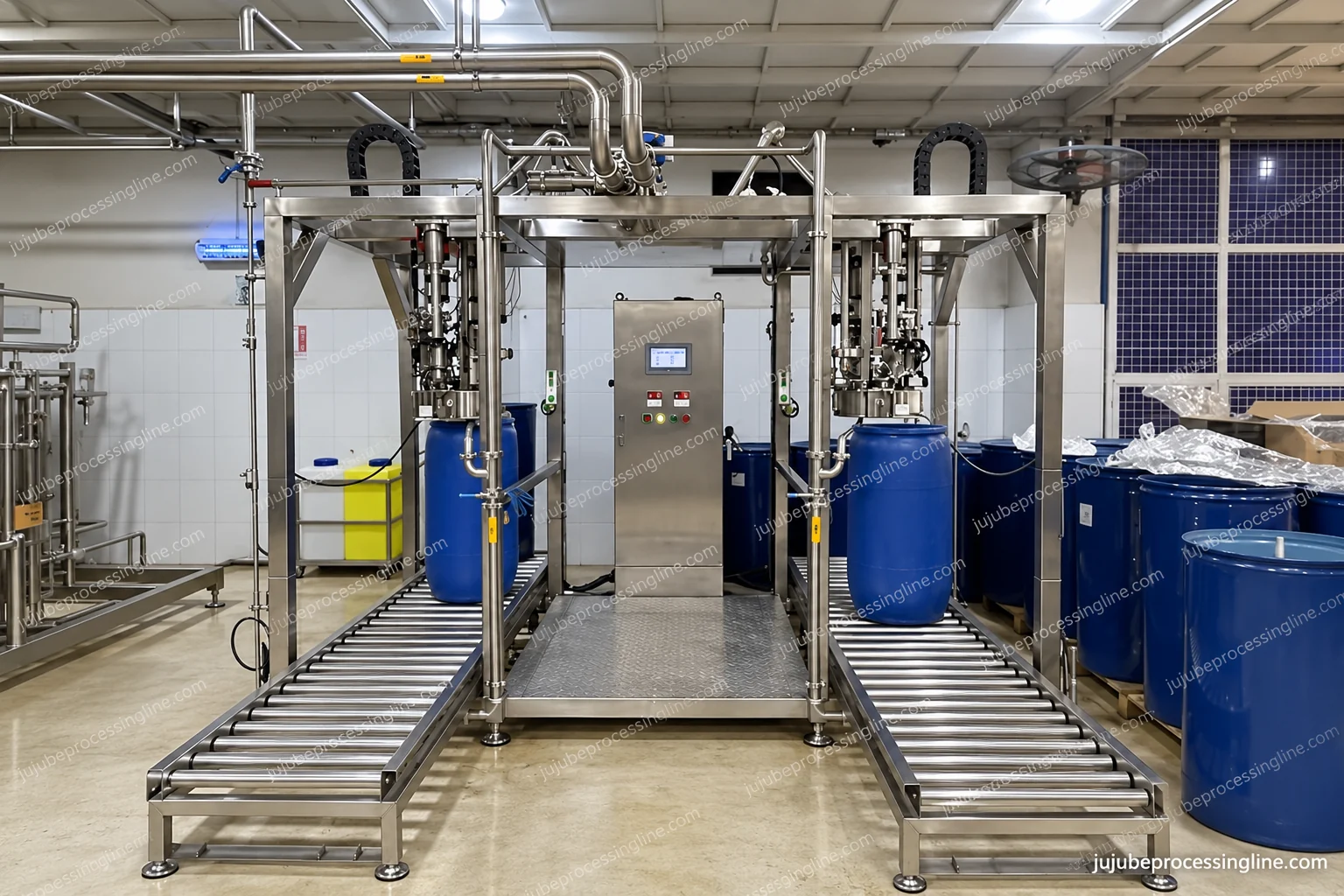
Decide whether concentrate is sent to a buffer, another treatment step or bulk filling. Identify the outlet temperature, transfer conditions, allowed hold time and package. A concentration stage alone does not establish an aseptic filling condition or finished-product storage life; those responsibilities need their own selected equipment and validation.