Describe the dried lot before selecting machines
State variety, size distribution, prior treatment, incoming dried mass and moisture if measured. Storage history and condition can affect handling and preparation. A description of Chinese jujube, Ziziphus jujuba, is more useful than the word dates alone, which can refer to a different fruit and a different equipment duty.
Keep washing separate from deliberate conditioning
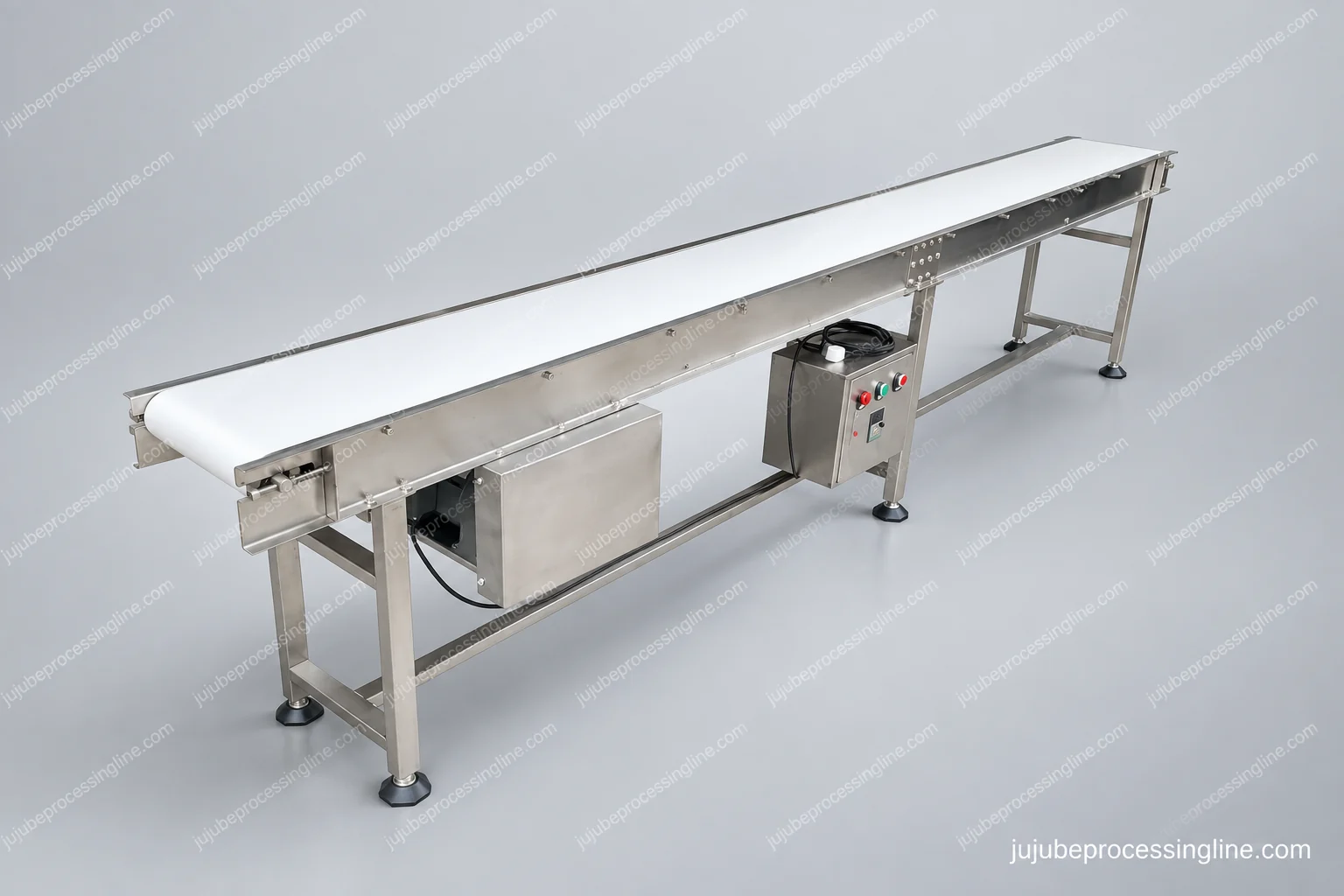
The washer and inspection conveyor prepare and present the received lot. Service water used for washing is not automatically water added to the product. Where conditioning or rehydration is required, identify the intended loading, liquid contact, discharge and measurement boundary rather than using a universal water ratio or time.
Trial the preparation sequence with stone control
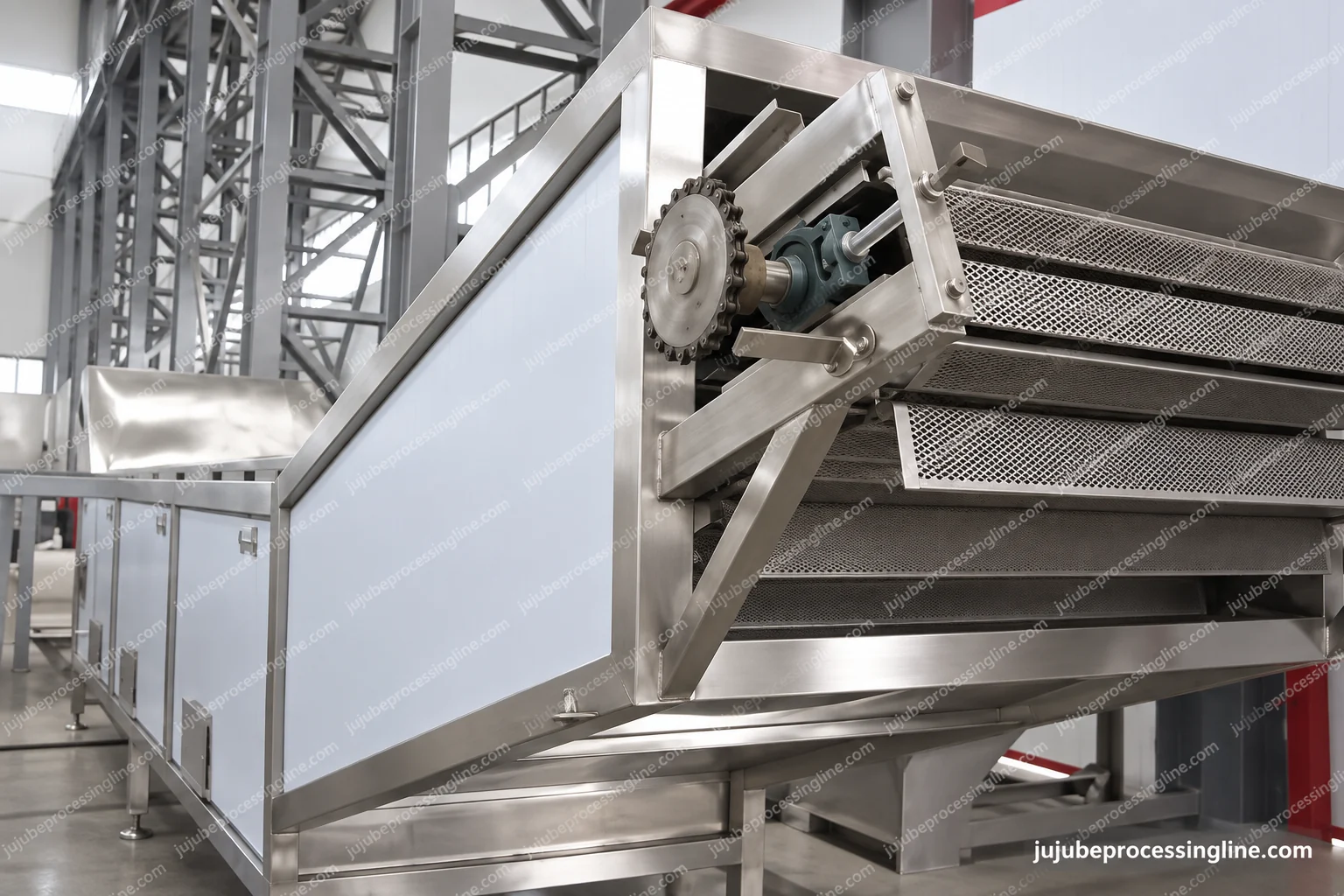
The appropriate fruit state and separation method must be assessed together. A continuous belt preheater is a distinct assembly from a whole-fruit conditioning vessel; a blending tank for prepared liquid does not prove that duty either. Release prepared fruit to the pulper only after checking the selected stone-control result.
Measure the stream your next machine receives
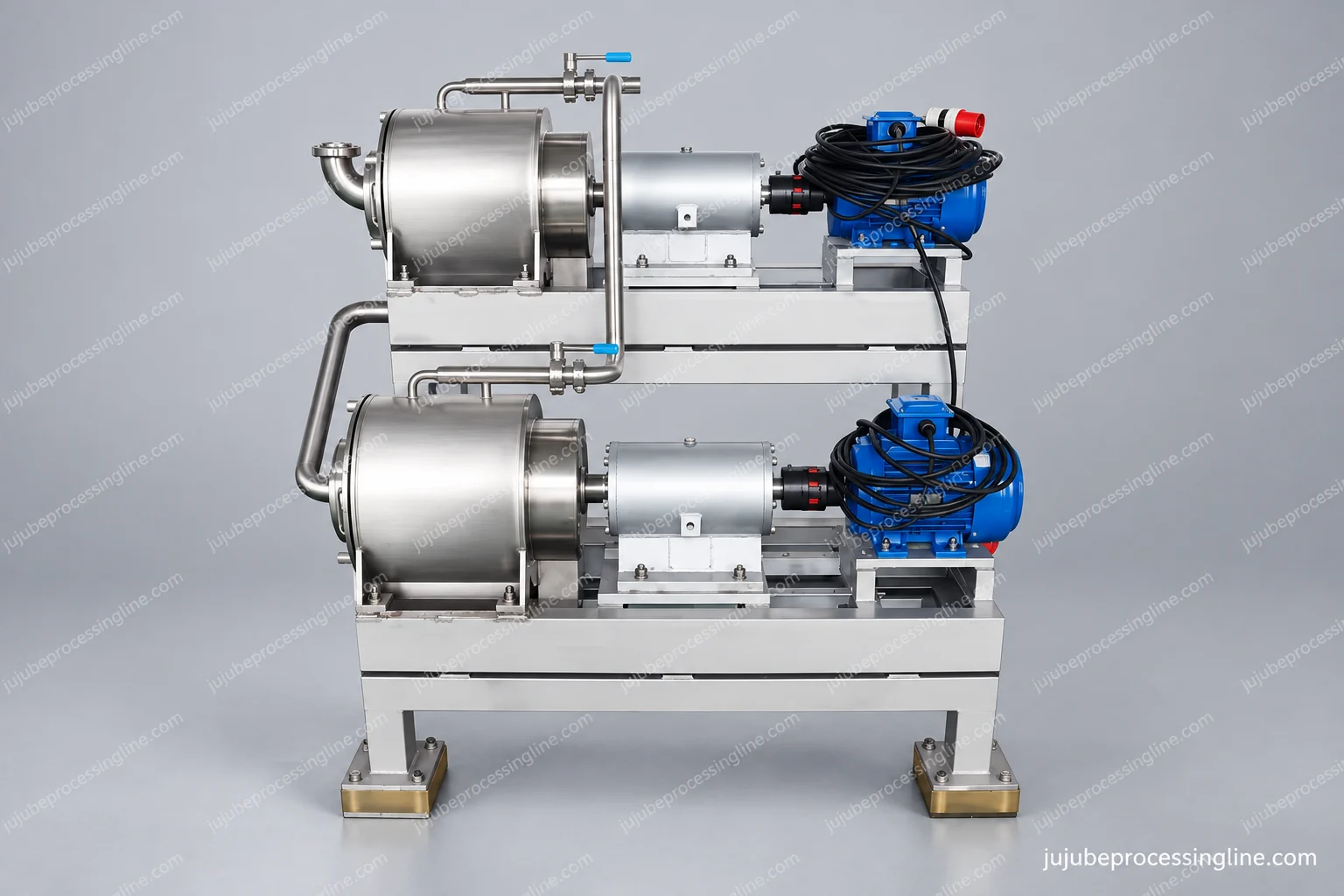
Record conditioned material, removed liquid, accepted product and rejects separately. Added water increases wet mass, but does not establish fruit recovery. The pulper, clarifier and thermal skid each need their own inlet quantity and material conditions, measured at a defined place in the process.
Choose the downstream product route
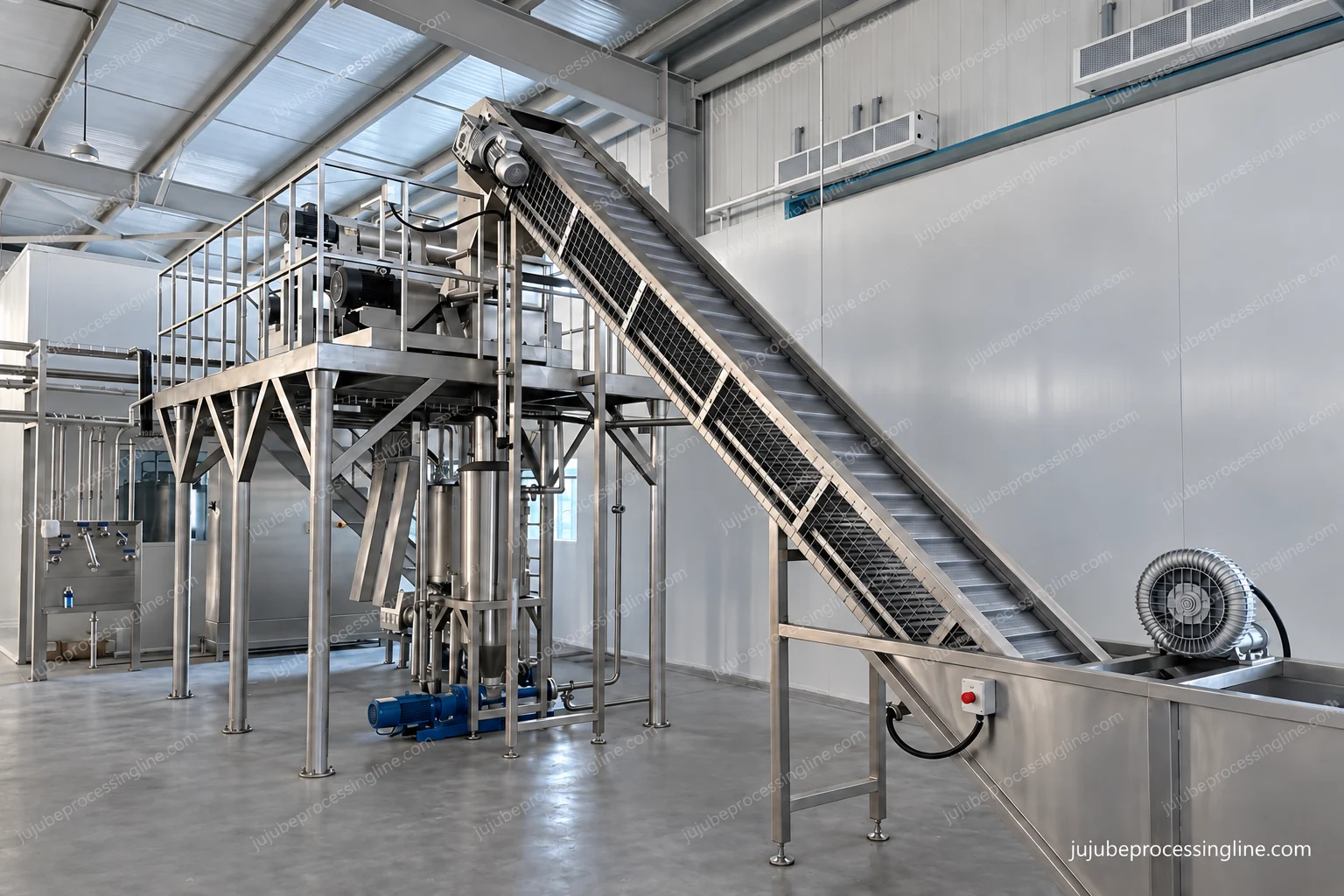
A puree route retains fruit body through pulping and refining. A juice or extract route needs an identified liquid preparation operation followed by selected liquid handling. Tell us the incoming dried lot, target product, existing preparation equipment and the actual capacity basis to begin the equipment discussion.