Define the clarity objective
Clarification should follow a product requirement and a stated test method. Record the suspended-solids character and the liquid appearance you want. A clear extract and a product intended to retain fruit body need different processing decisions; first decide whether removing suspended matter is useful for the intended product.
Provide a suitable prepared-liquid feed
The disc-stack family is selected for liquid composition, solids loading, density difference, viscosity and operating temperature. It does not receive unassessed whole fruit or automatically convert thick puree into clear juice. Identify the actual upstream extraction or liquid preparation outlet before sizing this operation.
Keep feed regulation and solids discharge visible
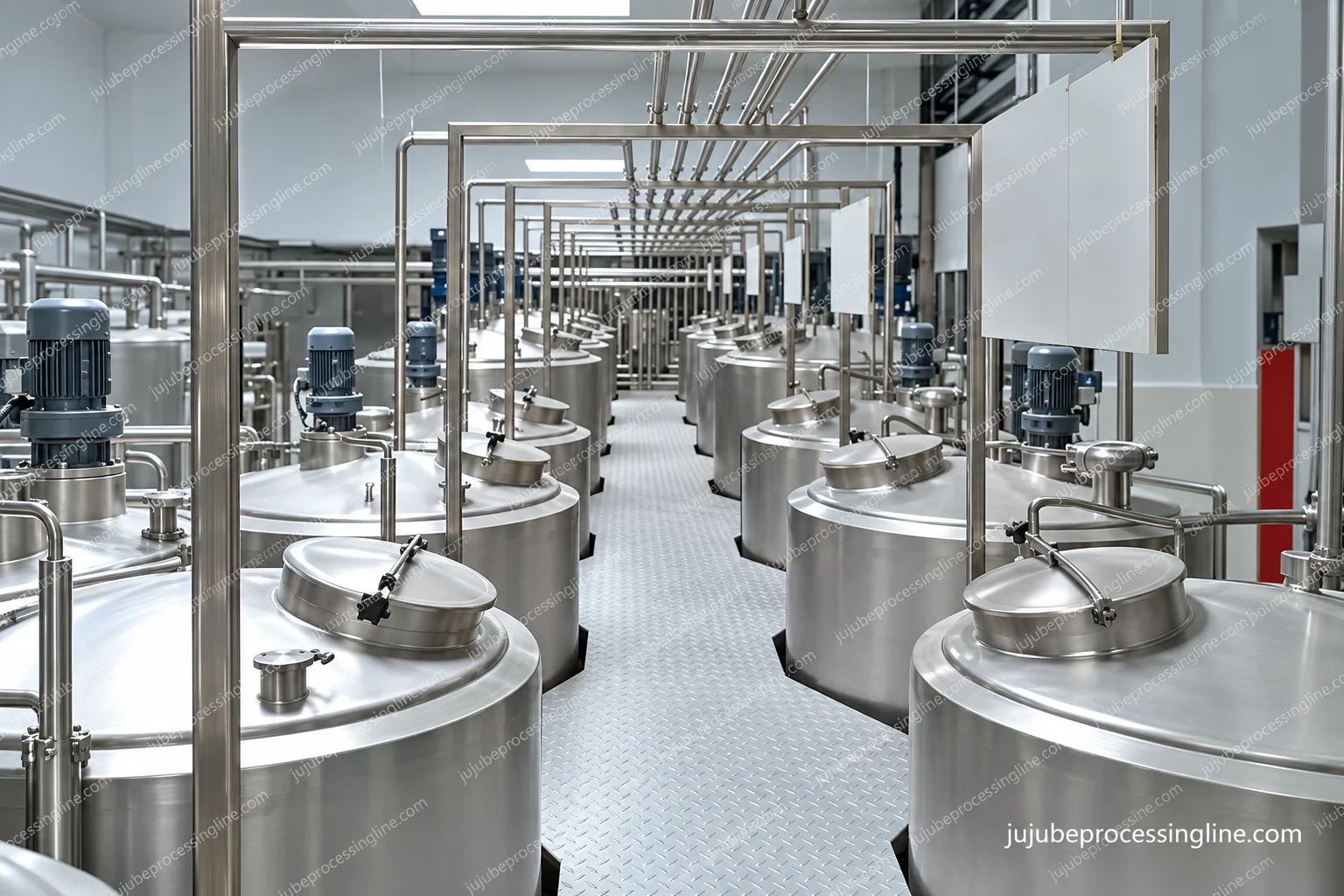
A stable inlet supports the selected separation duty. An appropriately chosen buffer can help match changing upstream supply to the clarifier. Arrange accessible collection of the solids-rich stream and account for retained product during operating checks. Do not mix discharge streams before sampling the selected result.
Distinguish centrifugal separation from membrane filtration
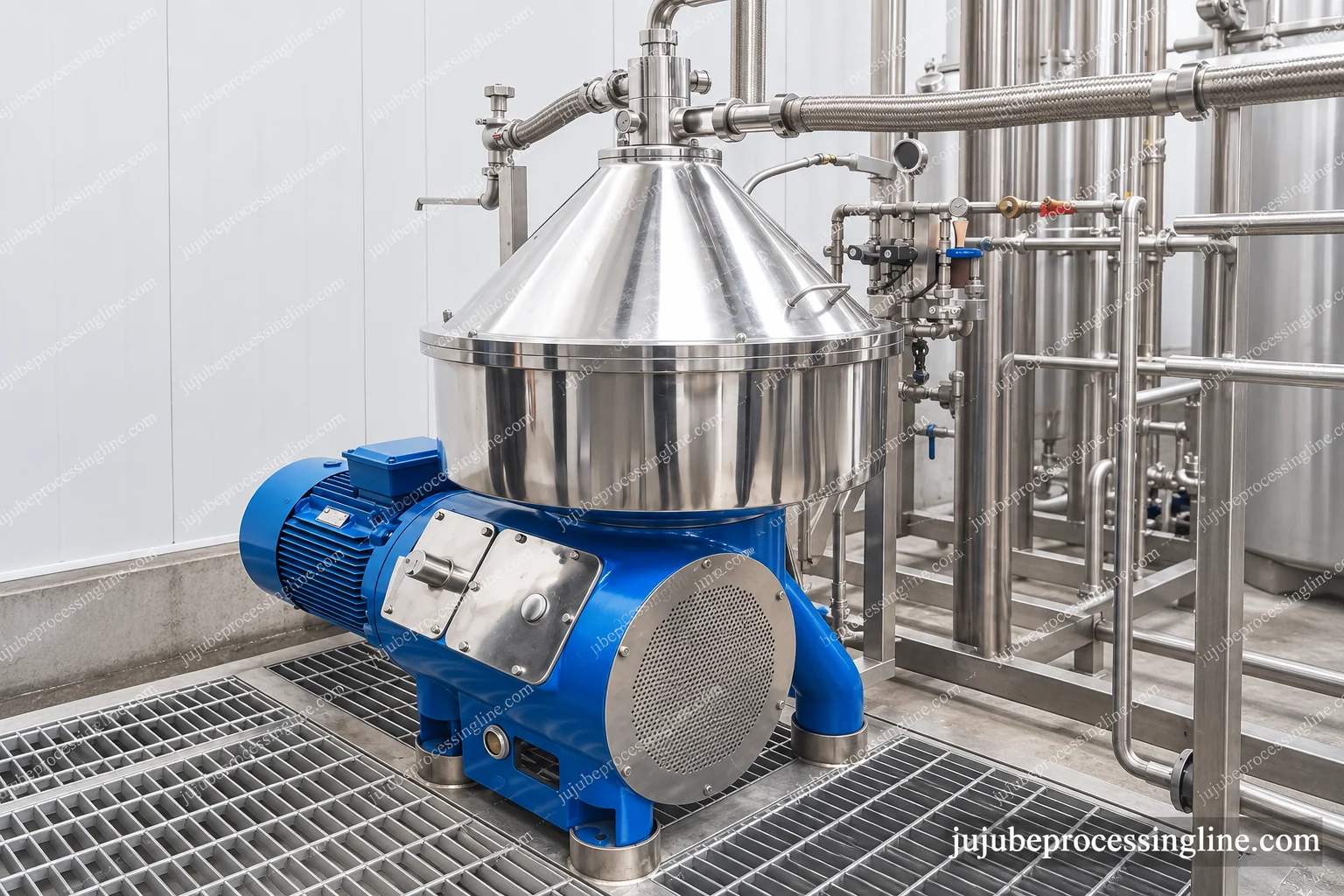
The shown bowl housing and drive belong to a centrifugal equipment family. They do not specify a membrane pore size, extraction yield or universal clarification result. If the project calls for a membrane process, define that separate duty and its evidence rather than relabelling the disc-stack assembly.
Request feed assessment and maintenance space
Send the liquid flow, solids information, viscosity at the stated temperature, required clarity and intended run length. Provide room for bowl service, drive access, safe isolation and connected cleaning paths. Ask for the proposed separator configuration and trial acceptance conditions in the equipment scope.