Identify the air-management requirement
Describe the prepared product, air loading and the effect you need to address before downstream treatment or filling. Vacuum deaeration is a selected product-handling duty, not a replacement for stone control or solids clarification. Include feed temperature and viscosity because they affect feeding, exposure and discharge.
Assess foaming under reduced pressure
A reduced-pressure stage can change how a product releases entrained air and forms foam. Representative-product assessment helps define the feed and vessel control arrangement. Foaming material must be kept out of the vacuum service circuit; identify the required observation and protection features with the proposed configuration.
Coordinate product level and feed stability
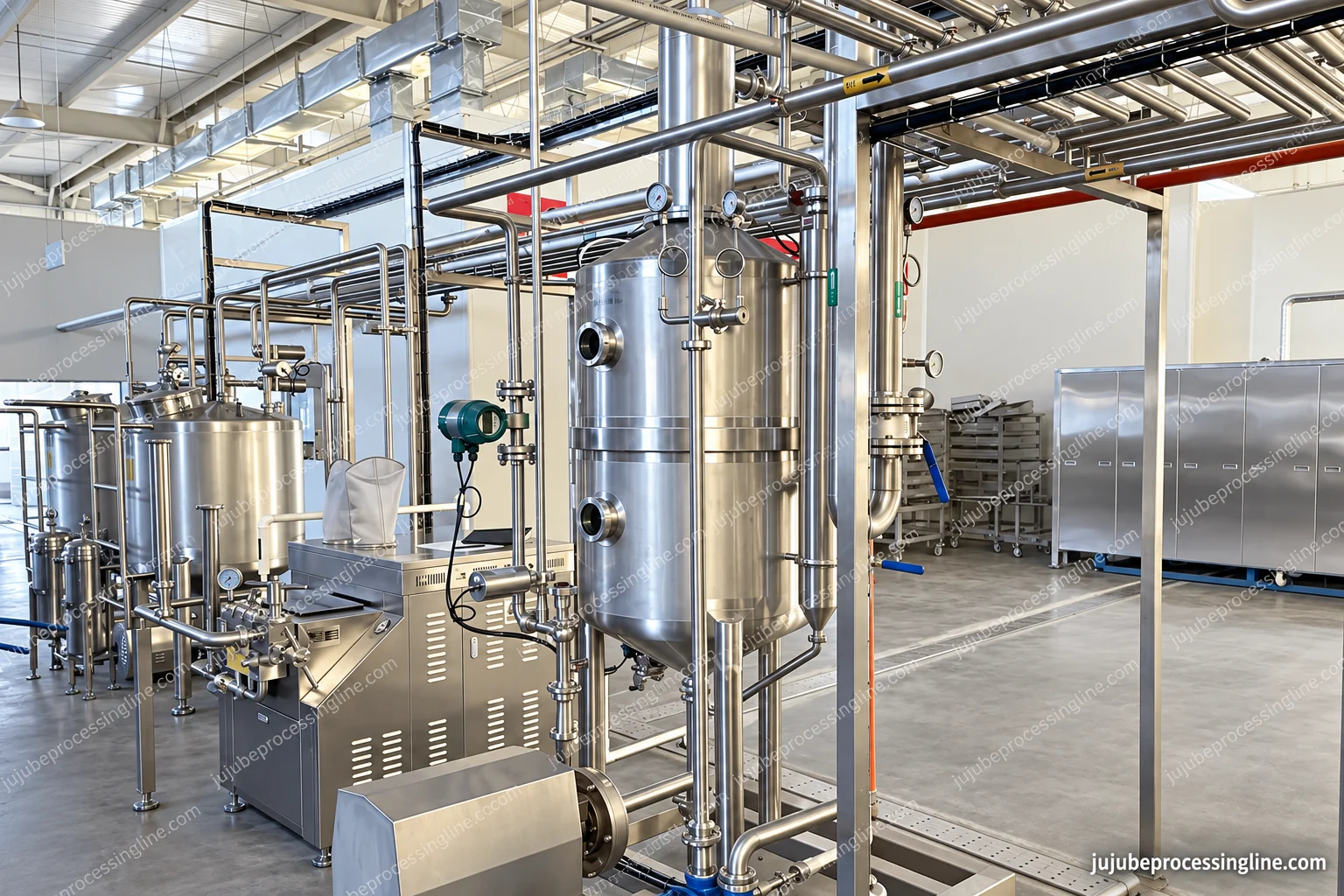
The inlet must supply product under the selected conditions while level control supports the intended exposure and outlet. A buffer may be needed for an irregular upstream stream. The shown sight ports support observation, but detailed working volume, internals and controls require the selected unit specification.
Connect the outlet to its real next duty
Review the following pump and treatment inlet, not just the vessel pressure. The product and vacuum service boundaries have different functions. Define discharge condition, transfer path, operating interruptions and safe isolation so that the unit fits the selected treatment sequence.
Plan inspection of the complete product path
Vessel walls, ports, seals, drains and connected collection sections need accessible cleaning and inspection. Request the inlet and outlet schedule, control description and service connections for the proposed unit. State what product data is measured and which conditions still need a representative trial.