Distinguish flow buffering from batch formulation
A buffer stabilizes supply between upstream and downstream operations. A blending duty organizes measured ingredients and mixing for a recipe. Some projects need both, but their operating purpose and batch records differ. Explain the feed pattern and desired product instead of selecting a vessel only by its outside dimensions.
Choose usable working volume
Shell capacity includes space outside the selected operating range. Define high and low levels, supply interruptions, downstream demand and allowed product hold conditions. These values determine useful buffer volume. Provide the actual material and the following pump inlet requirement when discussing the tank outlet.
Specify additions and mixing behaviour
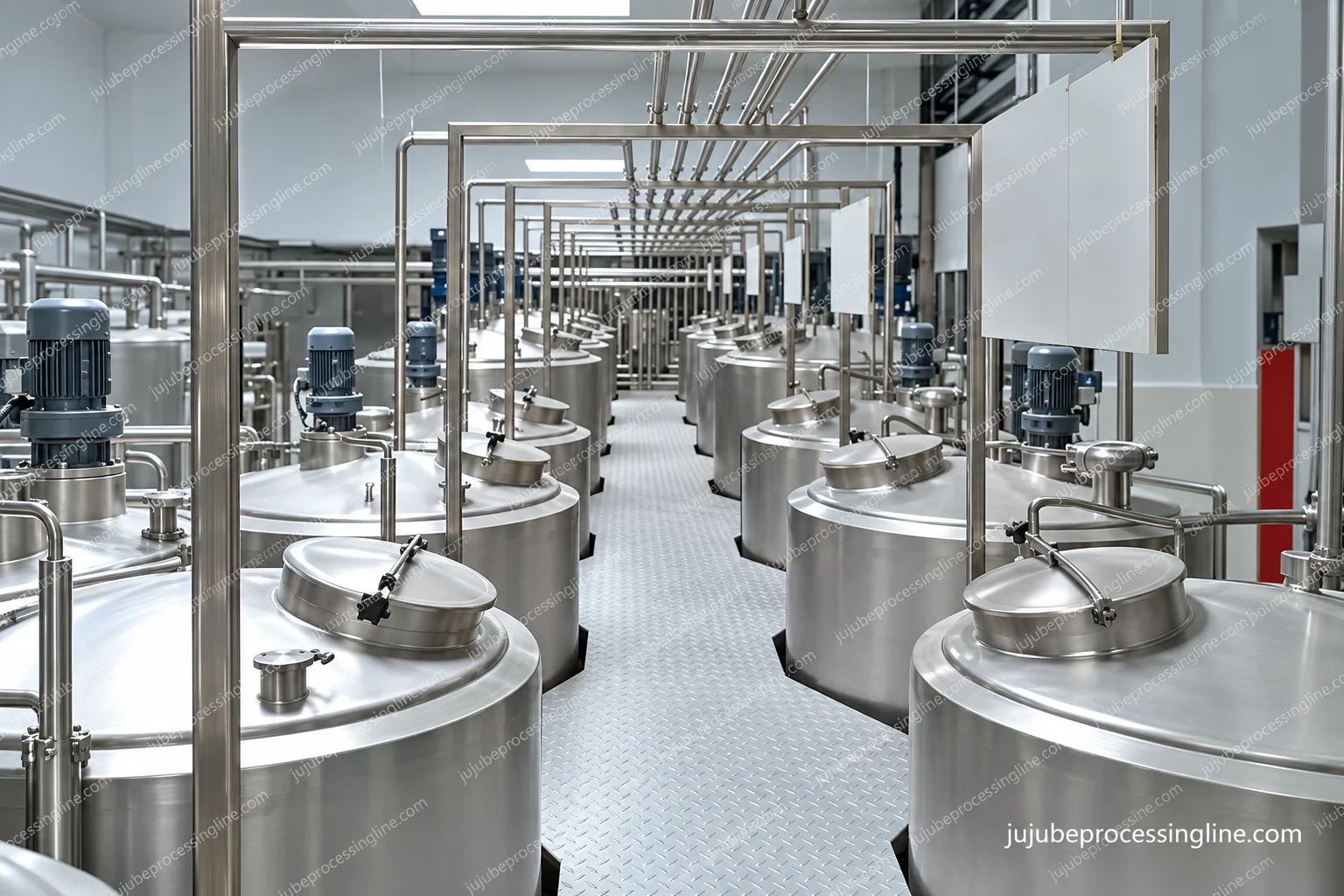
For blending, describe the prepared fruit intermediate, water and other ingredients, addition order and the required uniformity check. Dissolution and suspension can impose different mixing needs. The photographed tank row shows top drives and shared access; internal elements and any thermal features must be specified for the selected duty.
Connect the low point to the transfer path
Thick puree requires review of the outlet, pump suction, bends, elevation and pipe diameter. A thinner extract still needs a steady, controlled supply to the next machine. Discuss drainability and cleaning of valves and product low points together with level control and sampling.
Include service and sampling access
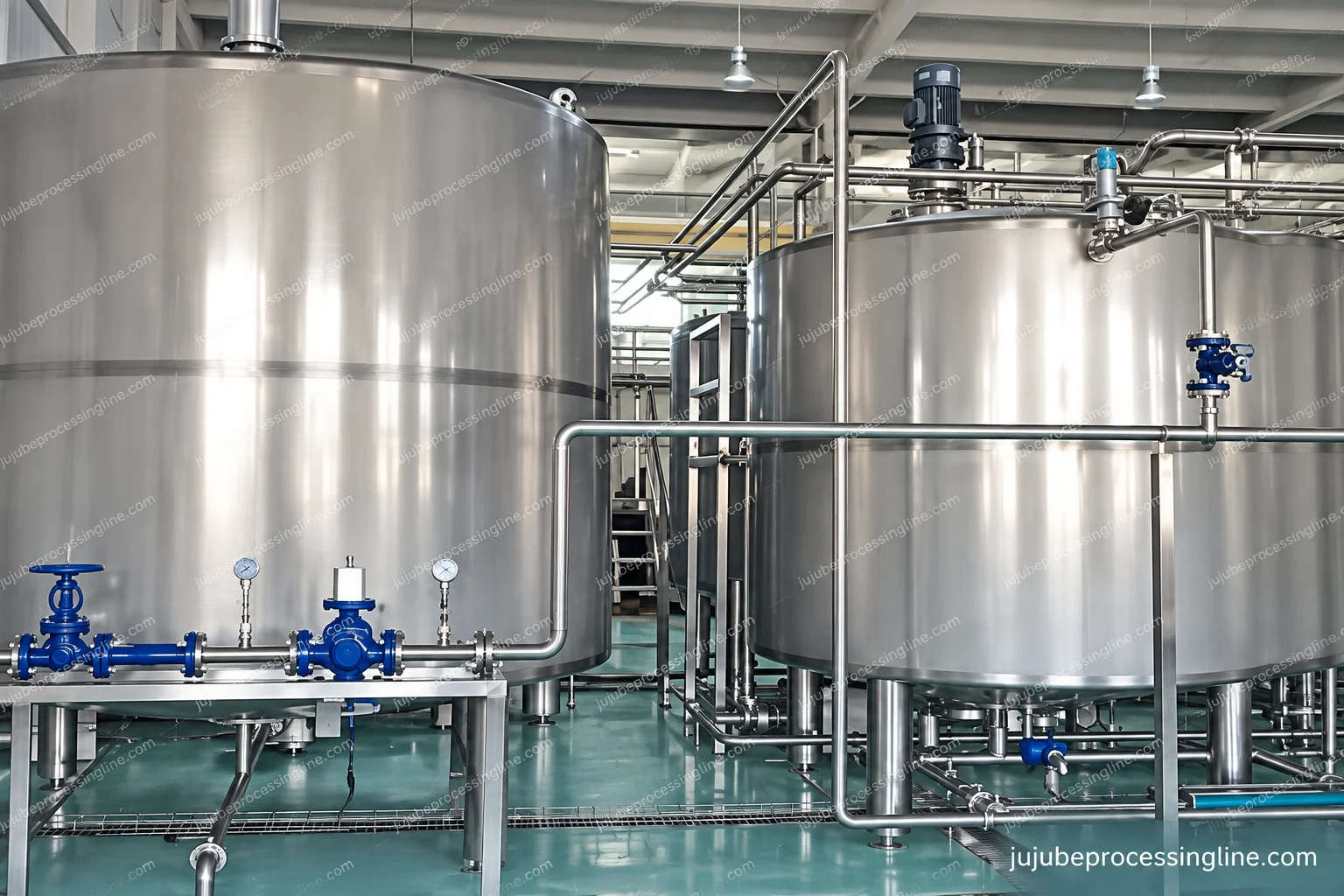
Provide a safe route to covers, platforms and ingredient openings. Identify the cleaning return and how the vessel is inspected after use. Ask for the working-volume range, selected internals, outlet layout and connection schedule in the quotation, rather than relying on a generic tank-group photograph.